Protein powder: when it helps, which kind and how much
On this page
You don’t need protein powder. It’s milk, soy or pea protein, dried, and a gram from a shake counts the same as a gram from food. If you want to and if you can, get your range from food first and keep powder for the meals food can’t fix. When you use it, pick a plain whey, or soy if you don’t eat dairy, with about 20 g of protein per 100 calories and a testing seal, and don’t make it a daily habit.
What we’d do
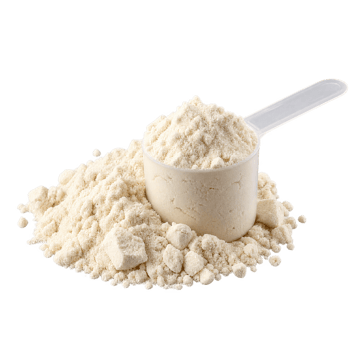
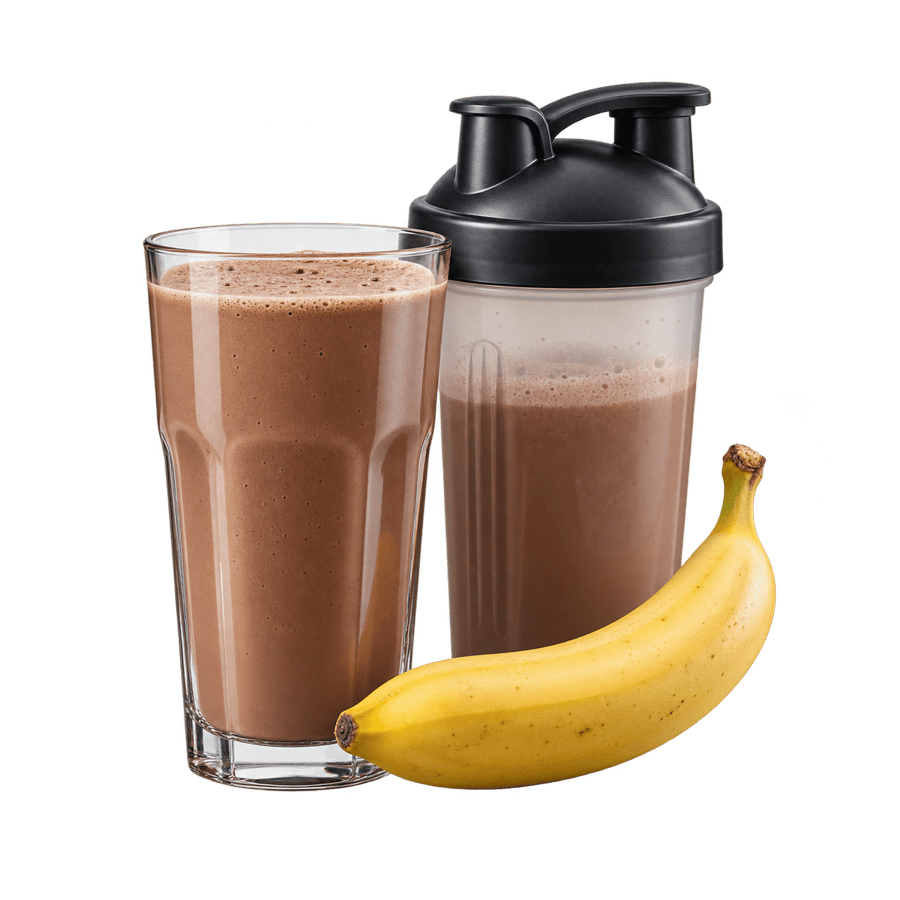
Start with food. If one meal keeps coming up short, a scoop of whey shaken with milk or stirred into yogurt or oatmeal adds about 25 g. Pick whey if you eat dairy and soy if you don’t, go by the grams of protein on the label, and look for a third-party seal. Use it on the days you need it, not every day, since most powders in the 2025 lead tests went past a cautious daily limit. If you have kidney disease, ask your doctor first.
If you remember three things
- A scoop of whey is about 25 g of protein in about 113 calories. That’s a whole meal line for many adults.
- Whey and soy carry every essential amino acid. Whey has the most leucine, about 11% of its protein.
- Plant powders carried the most lead. In 2025 tests they averaged about nine times the lead of dairy ones.
Two reputations, both off
Powder has a gym image. Some people think it’s a bit like cheating, and others think it builds muscle by itself. In the trials it did neither. A 2018 review of 49 trials with 1,863 people who lifted found that protein supplements added muscle and strength by raising the day’s total protein, and the extra muscle leveled off near 1.6 g per kg a day. A scoop worked like the same grams from dinner.
Powder is a spare tire. It gets you home on the day you need it, and nobody plans to drive on it every day.
When it helps
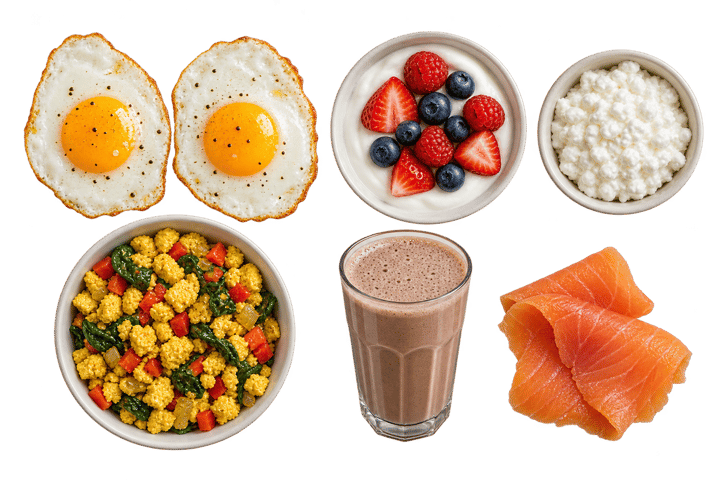
- A light breakfast. Coffee alone has almost no protein. A scoop shaken with a cup of 2% milk is about 33 g, enough for most meal lines. See how much protein at breakfast.
- A small appetite on a GLP-1. The 2025 joint advisory says some people “can meet protein targets by supplementing with high-protein shakes, bars, and other fortified products”. See protein on a GLP-1.
- A tight calorie budget. At about 22 g of protein per 100 calories, whey fits on 1,200 calories where peanut butter, at 3.7, can’t.
- A very high target, like a lean lifter on a diet counting 2.3 to 3.1 g per kg of lean mass.
When it doesn’t
On top of a day that already reaches your range, a scoop is about 113 more calories with water, or 235 with a cup of 2% milk, for protein you already have. See can protein make you gain weight?
As a daily meal replacement it also crowds out food. The 2025 to 2030 US guidelines open with “eat real food” and build their protein advice from eggs, meat, seafood, dairy, beans, nuts and soy. Powder doesn’t appear in them.
Which kind
| Powder | Made from | Every essential amino acid in the adult pattern? |
|---|---|---|
| Whey | Milk | Yes |
| Casein | Milk | Yes |
| Soy | Soybeans | Yes |
| Pea | Peas | Yes |
| Brown rice | Rice | Yes |
| Hemp | Hemp seeds | No |
From Stefan Gorissen and colleagues’ 2018 analysis of protein isolates, measured against the WHO, FAO and UNU adult pattern. Plant isolates averaged half the lysine of animal ones (3.6% of their protein against 7.0%), and soy, pea, brown rice, corn and potato still cleared the pattern. Oat, wheat and hemp didn’t. Blends, like pea with rice, can come close to animal protein, the authors wrote.
Leucine is the amino acid most tied to switching on muscle building in lab studies. In the same analysis it was 11.0% of whey protein, 8.8% of animal proteins on average and 7.1% of plant proteins, which is why whey is the default for lifting. On the digestibility score DIAAS, a 2020 review by Lieke Herreman and colleagues rated soy and whey high quality, and pea, oat, hemp, wheat and rice below that. A plant powder can close most of the gap with a bigger scoop or a blend. See is pea protein as good as whey?
How to check the tub
- Grams of protein per scoop, then per 100 calories. A plain unflavored whey isolate in USDA’s data is 25 g in 110 calories, 22.7 g per 100. The generic whey powder is 78% protein, the isolate 89%. Under about 15 g per 100 calories, sugar or fat is taking up the scoop.
- A short ingredient list. The US guidelines ask people to limit foods with artificial flavors and “low-calorie non-nutritive sweeteners”. Check the label for both.
- A third-party seal. The FDA doesn’t approve supplements before they’re sold, and the maker is responsible for what’s in the tub. The Defense Department’s Operation Supplement Safety lists four seals: NSF Certified for Sport, Informed Sport, USP Verified and BSCG Certified Drug Free. A seal means an independent lab checked that the contents match the label. It doesn’t mean the product was tested for safety or for whether it works.
- Published test results. Consumer Reports suggests checking whether a brand posts its own heavy metal tests. Few do, and without them, dairy powders came out lower in its tests.
The lead tests
In October 2025, Consumer Reports tested 23 protein powders and shakes. More than two thirds had more lead in one serving than 0.5 micrograms, its cautious daily level, which comes from California’s Proposition 65 limit. Plant-based products averaged about nine times the lead of dairy ones and about twice that of beef ones. CR advised against daily use for most of them, including half the dairy ones, and said even the worst were “far below the concentration needed to cause immediate harm”. smoothie.guide has the full story of the lead tests and what’s in a protein powder.
How much
One scoop is about 25 g, and for most adults that fills one meal. We’d keep it to one scoop on the days you need it, with the rest of your range from food. Put a shake into a meal in the meal line calculator, which has it as a preset.
Who should ask first
- Kidney disease. Your doctor sets your number. See protein with kidney disease.
- Under 18. TeensHealth says most doctors agree it’s best for teens to get their protein from food, and that long-term studies of supplements in teens haven’t been done.
10 sources
- Consumer Reports, Protein powders and shakes contain high levels of lead, October 14, 2025, updated January 8, 2026consumerreports.org
- US Food and Drug Administration, Questions and Answers on Dietary Supplementsfda.gov
- Operation Supplement Safety, US Department of Defense, Why is third-party certification important for dietary supplements?opss.org
- Gorissen et al., Protein content and amino acid composition of commercially available plant-based protein isolates, Amino Acids, 2018pmc.ncbi.nlm.nih.gov
- Morton et al., A systematic review, meta-analysis and meta-regression of the effect of protein supplementation on resistance training-induced gains in muscle mass and strength in healthy adults, British Journal of Sports Medicine, 2018pmc.ncbi.nlm.nih.gov
- Herreman, Nommensen, Pennings and Laus, Comprehensive overview of the quality of plant- and animal-sourced proteins based on the digestible indispensable amino acid score, Food Science and Nutrition, 2020pmc.ncbi.nlm.nih.gov
- USDA FoodData Central, SR Legacy record 173180 (whey powder), branded record 2339095 (unflavored whey isolate) and 171267 (2% milk)fdc.nal.usda.gov
- US Department of Agriculture and US Department of Health and Human Services, Dietary Guidelines for Americans, 2025 to 2030, January 2026cdn.realfood.gov
- Mozaffarian et al., Nutritional priorities to support GLP-1 therapy for obesity: a joint advisory from the American College of Lifestyle Medicine, the American Society for Nutrition, the Obesity Medicine Association and The Obesity Society, 2025pmc.ncbi.nlm.nih.gov
- Nemours TeensHealth, Sports Supplements, opened November 15, 2026kidshealth.org