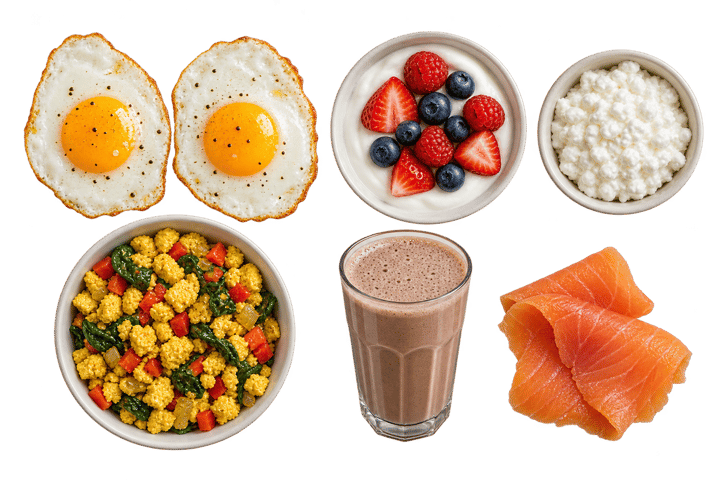
Does protein powder count as real protein?
On this page
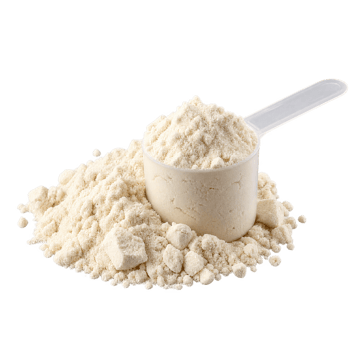
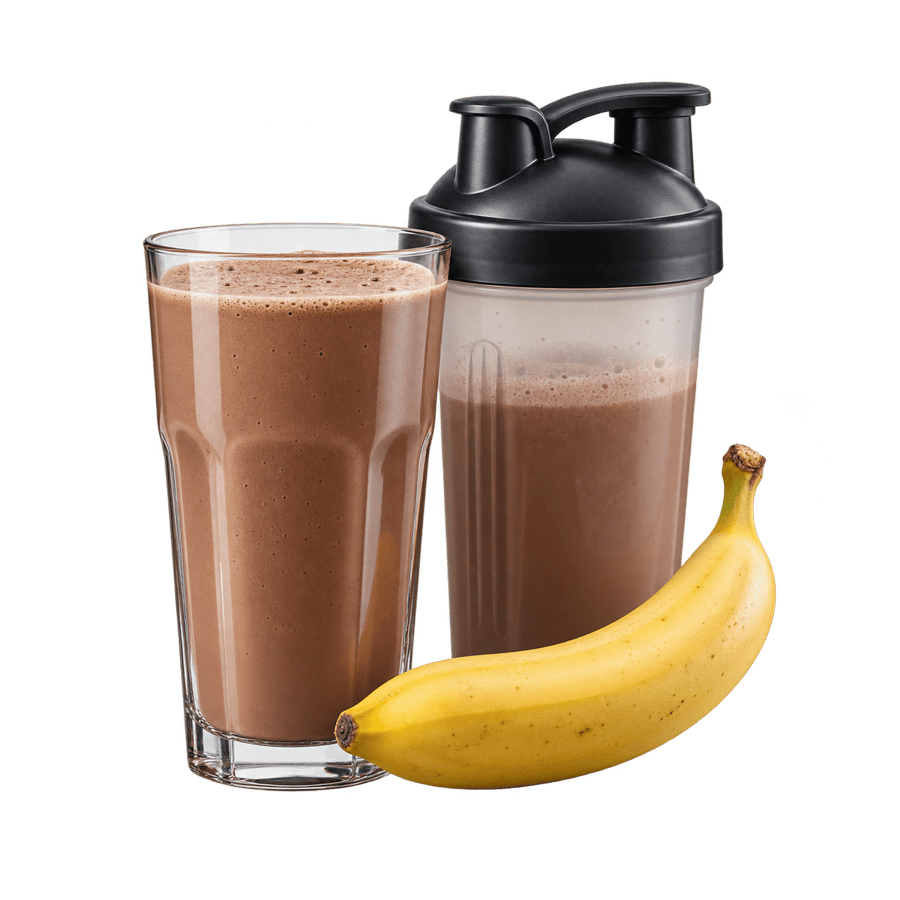
Yes. A gram of protein from a shake counts the same as a gram from food. A typical scoop of whey has about 25 g of protein in about 113 calories (USDA), and made with a cup of 2% milk it’s 33 g, enough to bring most breakfasts up to the meal line.
Powder has an image problem. Half the people who ask think it’s a bodybuilder thing, a bit like cheating, and the other half think it’s a shortcut to muscle. It’s neither. Whey is a part of milk, dried. Your body breaks it down into amino acids, the same building blocks it gets from milk, eggs or chicken.
We’d get protein from food first, if you want to and can, and use powder as a tool for the gaps. Powder is great for a breakfast that’s otherwise coffee, for a day on a GLP-1 when food won’t go down, for travel, and after training when a meal is hours away. We wouldn’t build a whole day on it, because food brings fiber, vitamins and minerals that a shake doesn’t. The 2025 to 2030 US Dietary Guidelines put their weight on whole protein foods and don’t mention powders at all. How to get enough protein without powder has two full days of food.
Protein from a shake is like money paid by card instead of cash. It’s the same amount in the account.
What’s in a scoop
| Powder | Scoop | Protein | Calories | Per 100 calories |
|---|---|---|---|---|
| Whey powder (USDA generic record) | 32 g | 25.0 g | 113 | 22.2 g |
| Whey isolate, unflavored (branded) | 28 g | 25 g | 110 | 22.7 g |
| Whey with a cup of 2% milk | 33.1 g | 235 |
From USDA FoodData Central. Scoops vary by brand, so the label on your tub wins. Per calorie, whey sits up with shrimp and canned tuna, ahead of chicken breast at 20.2 g.
Does powder build muscle like food?
In the biggest review of the question, a 2018 analysis of 49 trials with 1,863 people who lifted, protein supplements added muscle and strength. They did it by raising the day’s total, and the extra muscle leveled off at about 1.6 g per kg a day. The shakes worked because they were more protein. A gram from a scoop did the same job as a gram from dinner.
Whey also has more leucine than most foods, about 11% of its protein, according to a 2018 analysis of protein powders by Stefan Gorissen and colleagues. Leucine is the amino acid most tied to switching on muscle building in lab studies. Plant powders average about 7%, so they need a bigger scoop for the same leucine. See is pea protein as good as whey?
Where a shake earns its place
- A light breakfast. Coffee to a shake made with milk is 0 g to 33 g. See how much protein at breakfast.
- A small appetite on a GLP-1. The 2025 GLP-1 advisory from four US societies says some people meet their protein with shakes, bars or other high-protein products. See what to eat on Ozempic when you’re not hungry.
- A tight calorie budget. At 22 g of protein per 100 calories, it fits on 1,200 calories where peanut butter can’t.
Where it doesn’t
A shake added on top of a day that was already enough food is about 235 more calories, every day. See can protein make you gain weight? And if the rest of your meals already clear your line, a shake is buying something you have.
Put a shake into a meal in the meal line calculator, which has it as a preset, and see where your day lands in Is my number enough?
5 sources
- USDA FoodData Central, SR Legacy record 173180 (whey powder) and branded record 2339095 (unflavored whey isolate), with 171267 (2% milk)fdc.nal.usda.gov
- Morton et al., A systematic review, meta-analysis and meta-regression of the effect of protein supplementation on resistance training-induced gains in muscle mass and strength in healthy adults, British Journal of Sports Medicine, 2018pmc.ncbi.nlm.nih.gov
- Gorissen et al., Protein content and amino acid composition of commercially available plant-based protein isolates, Amino Acids, 2018pmc.ncbi.nlm.nih.gov
- Mozaffarian et al., Nutritional priorities to support GLP-1 therapy for obesity: a joint advisory from the American College of Lifestyle Medicine, the American Society for Nutrition, the Obesity Medicine Association and The Obesity Society, 2025pmc.ncbi.nlm.nih.gov
- US Department of Agriculture and US Department of Health and Human Services, Dietary Guidelines for Americans, 2025 to 2030, January 2026cdn.realfood.gov