Which plant proteins go together?
On this page
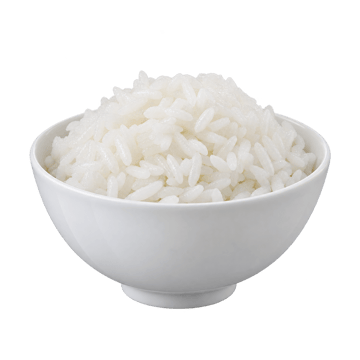
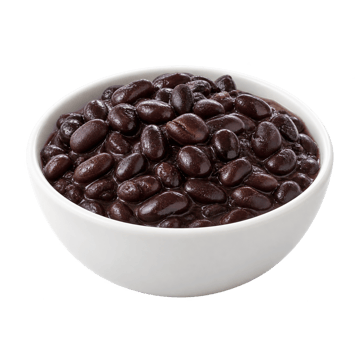
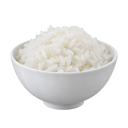
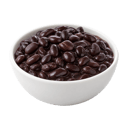
Rice and beans really do fill each other’s gaps. Rice is short on lysine, beans have plenty, and a cup of each meets the adult pattern with room to spare. It takes less than you’d think: a quarter cup of black beans is enough to bring a cup of rice up to the line. Most classic pairs work the same way. Peanut butter on whole wheat doesn’t, because both foods are short on the same amino acid.
What we’d do
When a meal is mostly plants, pair a grain, nut or seed with a bean, lentil, chickpea or soy food. That covers lysine, the one amino acid grains and nuts run short on. Treat a peanut butter sandwich as a side, or add beans or soy to the day. Then stop worrying about it, because pairing at every single meal isn’t required. The 2025 to 2030 US guidelines ask vegetarians and vegans to vary their plant proteins over the day, and the total still counts most, so check your daily range. The Gyroscope app personalizes yours.
If you remember three things
- Grains and nuts are short on lysine. Beans, lentils and soy have plenty. One of each covers it.
- Peanut butter and bread are both short on lysine, so the sandwich stays at 64% of the pattern.
- Variety over the day does the same job as pairing on one plate.
Pick two and see
Choose two plant foods and their servings. The bars are the pair’s nine essential amino acids per gram of protein, as a share of what adults need, and the line is 100%. The thin marks show each food on its own.
Together they meet the adult pattern
- The two together
- White rice alone: 80%, lysine
- Black beans alone: meets it
11 g short of a 30 g meal line, the line for 165 lb. Set your weight to see yours.
Amino acids from USDA FoodData Central, against the adult requirement pattern (FAO 2013). Composition only, before digestion. Soy foods use cooked soybeans and whole wheat uses the whole-wheat pita record, because their own rows don't add up.
The Gyroscope app personalizes yours. These are typical ranges to show you if you're too low, and many people are.
Why some pairs work and some don’t
Plant proteins come in two families. Beans, lentils, chickpeas and soy carry plenty of lysine and are lower in methionine and cysteine. Grains, nuts and most seeds are the reverse: plenty of methionine and cysteine, not much lysine.
 White rice80%, short on lysine
 Black beansMeets the pattern
 Whole wheat60%, short on lysine
 ChickpeasMeets the pattern
 Peanut butter68%, short on lysine
 Soy (tofu, tempeh, edamame)Meets the pattern
A grain and a bean cover each other, the way two jigsaw boxes with different missing pieces make one whole picture. Two grains, or a grain and a nut, are missing the same piece. Peanut butter has 31 mg of lysine per gram of protein and whole wheat 27, against the 45 adults need, and no amount of either one fixes it.
The classic pairs, scored
Each pair at its usual servings, from USDA’s amino acid rows.
| Pair | Protein | Calories | Together | What it takes |
|---|---|---|---|---|
| 1 cup rice and 1 cup black beans | 19.5 g | 432 | Meets the pattern | A quarter cup of beans would do it |
| 1 cup rice and 1 cup lentils | 22.2 g | 435 | Meets the pattern | |
| 1 cup pasta and 1 cup chickpeas | 21.7 g | 465 | Meets the pattern | Three quarters of a cup of chickpeas would do it |
| 1/2 cup firm tofu and 1 cup quinoa | 29.9 g | 403 | Meets the pattern | Both meet it alone |
| 1/2 cup firm tofu and 2 slices whole wheat | 29.8 g | 343 | Meets the pattern | |
| 2 oz whole-wheat pita and 1/4 cup hummus | 8.5 g | 255 | 85%, short on lysine | 10 tbsp of hummus brings it to the line |
| 2 slices whole wheat and 2 tbsp peanut butter | 15.1 g | 353 | 64%, short on lysine | No amount of either |
| 1/2 cup oats and 1 oz hemp seeds | 14.3 g | 310 | 97%, short on lysine | Oats meet it alone |
Two surprises. Hummus and pita, the most famous pair after rice and beans, needs a lot more hummus than most people spread. The pita is short on lysine, and a quarter cup of hummus doesn’t carry enough to cover it. And oats meet the adult pattern on their own, so stirring in hemp seeds adds protein but pulls the score down a little, since hemp is short on lysine too.
Do you have to combine them at every meal?
No. You’ll still see advice to pair proteins at every meal, but the US guidelines don’t ask for it. They tell vegetarians and vegans to “diversify plant protein sources for amino acid balance”, which is about the mix of plant proteins you eat over time. They say nothing about pairing foods on one plate.
The trials point the same way. In a 2023 trial at the University of Exeter, 22 young adults lifted for 10 weeks on about 2 g of protein per kg a day. The vegan group built as much muscle as the group eating meat. In a 2025 review of 43 trials, soy matched milk for muscle, while single plant proteins other than soy fell short. Those studies looked at how much protein people ate and where it came from. We couldn’t find a trial that tested pairing at the same meal against eating the same foods across a day.
We’d pair foods where it’s easy, because it often is: beans with rice, lentils with bread, tofu with quinoa. And we wouldn’t skip a meal you like because it’s “incomplete”.
What digestion adds
The scores above count what’s in the food. DIAAS, the newer score, also counts how much is absorbed, and it’s lower for most plant proteins. In a 2020 analysis of published pig studies, Laure Herreman and colleagues modeled pairs of protein ingredients. Some pairs scored higher together than either one alone, and some landed just under the better one.
| Mix | Ratio by protein | DIAAS together | Each alone |
|---|---|---|---|
| Pea and wheat | 60 to 40 | 85 | 70 and 48 |
| Soy and wheat | 90 to 10 | 90 | 91 and 48 |
| Corn and soy | 15 to 85 | 88 | 36 and 91 |
| Fava bean and corn | 75 to 25 | 64 | 55 and 36 |
They scored against FAO’s pattern for children 6 months to 3 years, which is stricter than the adult one, and the authors work at Avebe, a company that sells potato protein. Pea and wheat, a legume and a grain, scored higher together than either one alone, the same pattern the USDA numbers show.
Set a target for the meal
Completeness is one half. The other is getting enough protein into the meal. Your meal line is about 0.4 g per kg of body weight, about 30 g at 165 lb, and the tool shows how close each pair gets.
A cup of rice and a cup of black beans is 19.5 g, short of 30. These plant meals clear it:
- 1 1/2 cups of lentils with a cup of rice: about 31 g, 550 calories.
- Half a cup of firm tofu with a cup of quinoa: 29.9 g, 403 calories.
- Half a cup of firm tofu with 2 slices of whole wheat: 29.8 g, 343 calories.
Soy gets there in the fewest calories, which is why our vegan guide leans on it. The full charts for every food are in complete protein, charted.
6 sources
- USDA FoodData Central, SR Legacy amino acid rows, pulled from the FDC API on November 15, 2026: records 168878, 173735, 172421, 173757, 172454, 174916, 174266, 173806, 174271, 168917, 173904, 169737, 170567, 170556, 170148 and 170554, plus the serving rows in 172475, 174272, 168411 and 172688fdc.nal.usda.gov
- FAO, Dietary protein quality evaluation in human nutrition, FAO Food and Nutrition Paper 92, 2013, Table 3 (the adult pattern)fao.org
- US Department of Agriculture and US Department of Health and Human Services, Dietary Guidelines for Americans, 2025 to 2030, January 2026cdn.realfood.gov
- Herreman, Nommensen, Pennings and Laus, Comprehensive overview of the quality of plant- and animal-sourced proteins based on the digestible indispensable amino acid score, Food Science and Nutrition, 2020pmc.ncbi.nlm.nih.gov
- Monteyne et al., Vegan and omnivorous high protein diets support comparable daily myofibrillar protein synthesis rates and skeletal muscle hypertrophy in young adults, Journal of Nutrition, 2023pmc.ncbi.nlm.nih.gov
- Reid-McCann et al., Effect of plant versus animal protein on muscle mass, strength, physical performance, and sarcopenia: a systematic review and meta-analysis of randomized controlled trials, Nutrition Reviews, 2025pmc.ncbi.nlm.nih.gov