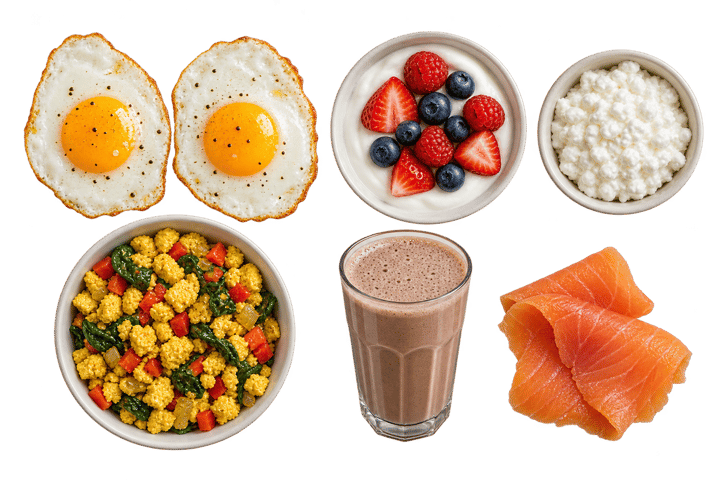
Lean protein or just more food, what's the difference?
On this page
You can get 30 g of protein from almost any food if you eat enough of it. Three and a half ounces of grilled chicken breast gets you there in about 150 calories. Four and a quarter cups of spaghetti get you there in about 820. The difference between lean protein and just eating more is everything that comes along with the protein.
What we’d do
Look at the meals that come up short, usually breakfast and lunch, and put one lean food in each: something with about 15 g of protein or more per 100 calories, like Greek yogurt, cottage cheese, tuna, chicken, turkey, egg whites or seitan. Let the rest of the plate be whatever you like. If you need the calories, because your appetite is small or you train hard or you’re trying to gain, eating more of everything is a perfectly good way to get your protein. The Gyroscope app personalizes yours.
If you remember three things
- 30 g of protein costs 124 to 1,450 calories, depending on the food it comes in.
- One lean food per meal does most of the work. The rest of the plate can be anything.
- Big meals work too. You get the same protein with more food and more calories.
Why “just eat more” sounds right
Almost everything has some protein in it. A slice of whole wheat bread has 4 g, a cup of spaghetti has 7 g and a plain bagel has 11 g. So if you eat a big enough dinner, the protein shows up whether you planned it or not.
That’s what most Americans already do. In the latest national survey, US adults ate 42% of their day’s protein at dinner, about 32 g, and only 19% at breakfast. Dinner gets there by being the biggest meal. Breakfast and lunch are smaller, and they come up short.
A big meal can hit your protein. What changes is how much else you eat to get there.
What 30 g of protein costs, food by food
Here’s every common food on this site, ranked by the calories it takes to eat 30 g of protein from that food alone, with how much of the food that is.
-
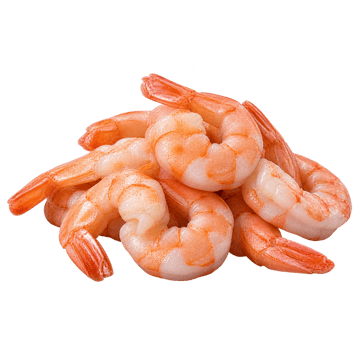
 Shrimp4 1/2 oz 124 cal
-
 Tuna, light, canned in water5 1/2 oz drained 133 cal
-
 Whey protein powder1 1/4 scoops 135 cal
-
 Cod4 1/2 oz 138 cal
-
 Turkey breast3 1/2 oz 138 cal
-
 Egg white8 egg whites 143 cal
-
 Chicken breast3 1/2 oz cooked 149 cal
- Pork tenderloin4 oz 164 cal
-
 Greek yogurt, plain nonfat2 cups (5.3 oz each) 174 cal
-
 Cottage cheese, 1%1 cup 174 cal
- Seitan strips4 oz 180 cal
-
 Top sirloin, lean3 1/2 oz 182 cal
-
 Ground beef 93/73 1/2 oz 217 cal
-
 Tofu, firm3/4 cup 250 cal
-
 Salmon, farmed5 oz 280 cal
-
 Tempeh5 oz 284 cal
-
 Edamame, shelled1 3/4 cups 305 cal
- Egg, whole, large5 large eggs 340 cal
-
 Lentils1 3/4 cups 386 cal
-
 Black beans2 cups 447 cal
-
 Milk, 2%3 3/4 cups 455 cal
-
 Cheddar4 1/2 oz 528 cal
-
 Pumpkin seeds3 1/2 oz 555 cal
-
 Chickpeas2 cups 555 cal
-
 Whole wheat bread7 1/2 slices 610 cal
-
 Bagel, plain2 3/4 bagels 747 cal
-
 Peanut butter8 1/2 tbsp 808 cal
-
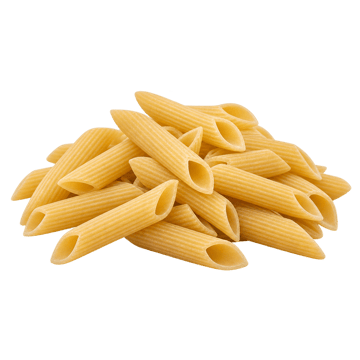
 Spaghetti4 1/4 cups 817 cal
-
 Quinoa3 3/4 cups 818 cal
-
 Almonds5 oz 819 cal
-
 Oats, dry2 3/4 cups 861 cal
-
 White rice7 cups 1,450 cal
The top of the chart is seafood, poultry, egg whites and the strained dairy foods, all under about 180 calories. Tofu, salmon, tempeh and edamame sit in the middle, from 250 to about 300. Whole eggs come in at 340, and beans and lentils at 390 to 450. Then the cliff. Bread, bagels, peanut butter, pasta, quinoa, almonds and oats all cost 600 to 860 calories, and rice costs about 1,450, because you’d need 7 cups.
It’s a bit like buying batteries that only come in a pack with a flashlight. The batteries are what you came for, and the food decides how big the pack is.
Two meals with the same protein
The difference is easiest to see on a plate. Here are two dinners and two breakfasts from the same USDA rows.
| Meal | What’s on it | Protein | Calories |
|---|---|---|---|
| A big pasta dinner | 4 cups of spaghetti, sauce not counted | 29 g | 784 |
| A lean anchor dinner | 3 oz of grilled chicken breast and 1 cup of spaghetti | 33 g | 324 |
| A big bagel breakfast | 2 plain bagels | 22 g | 554 |
| A lean anchor breakfast | A 5.3 oz cup of nonfat Greek yogurt and 2 large eggs | 28 g | 232 |
The pasta dinner gets close to 30 g of protein. It just takes 460 more calories than the chicken plate to do it. The bagel breakfast never quite gets there, and it costs more than twice the calories of the yogurt and eggs.
 4 cups spaghetti
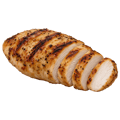 Chicken and 1 cup spaghetti
 2 bagels
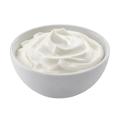
 Greek yogurt and 2 eggs
Why protein per calorie changes how much you eat
There’s a second reason the trade isn’t neutral. When food is low in protein, people tend to eat more of it.
Across 38 trials, a review by Alison Gosby and colleagues found that diets with a lower share of protein went with more total calories eaten. In one 22-person trial that David Raubenheimer and Stephen Simpson described in 2023, cutting protein from 15% to 10% of calories made people eat 12% more, mostly from snacks. Raising protein to 25% didn’t make them eat less, so the effect seems to work one way. A low-protein day pushes eating up, and a high-protein day doesn’t push it down by the same amount.
Protein also costs more to digest. Your body uses about 20 to 30% of protein’s calories just to process it, against 5 to 10% for carbohydrate and 0 to 3% for fat. That’s a small effect on a whole day, but it all points the same direction.
When eating more is the better trade
Lean isn’t always the goal. Some people need the calories.
- Older adults with a small appetite. The PROT-AGE group of geriatric experts asks for at least 1.0 to 1.2 g of protein per kg a day after 65, and for someone who isn’t hungry, a bigger plate of ordinary food can be easier than a protein shake. Older muscle also needs a bigger meal to get going, which our after 50 guide covers.
- People training hard or trying to gain. If you need 3,000 calories, the extra food is welcome, and the protein comes with it.
- Plant eaters. Beans, lentils and grains cost more calories per gram of protein than chicken, and they bring fiber that chicken doesn’t. Our vegan and vegetarian guides show days that still reach the range.
The 2025 to 2030 US Dietary Guidelines set 1.2 to 1.6 g per kg a day, “adjusting as needed based on your individual caloric requirements.” Your calories decide which trade makes sense.
What counts as a lean anchor
We use 15 g of protein per 100 calories as the line. Above it, one normal serving gets most meals to the meal line without blowing up the calories.
| Food | Serving | Protein | Per 100 calories |
|---|---|---|---|
| Shrimp, cooked | 3 oz | 20 g | 24.2 g |
| Canned light tuna | 3 oz | 17 g | 22.6 g |
| Whey protein | 1 scoop | 25 g | 22.2 g |
| Cod or turkey breast | 3 oz | 19 to 25 g | 21.7 g |
| Egg whites | 1 large white | 4 g | 21.0 g |
| Chicken breast, grilled | 3 oz | 26 g | 20.2 g |
| Pork tenderloin | 3 oz | 22 g | 18.3 g |
| Nonfat Greek yogurt | 5.3 oz cup | 15 g | 17.3 g |
| 1% cottage cheese | 1/2 cup | 14 g | 17.2 g |
| Seitan strips | 2 oz | 15 g | 16.7 g |
| Top sirloin, lean | 3 oz | 25 g | 16.5 g |
Seitan is the only plant food over the line. Tofu (12.0) and tempeh (10.6) come next, and they still do the job in a bigger serving.
Is lean always healthier?
No. Lean is about calories, and calories are only one part of a food. Farmed salmon has about half the protein per calorie of cod (10.7 against 21.7), and it carries omega-3 fats that cod doesn’t. A whole egg (8.8) has less protein per calorie than an egg white (21.0), but 43% of the egg’s protein is in the yolk. Beans rank low per calorie and high on fiber.
We’d use the lean foods where they solve a problem, at the meals that come up short, and eat everything else for the reasons you’d eat it anyway. The rankings show the same foods per calorie, per dollar and by how complete their protein is.
7 sources
- USDA FoodData Central, SR Legacy records for every food on the chart (IDs on the per-calorie calculator)fdc.nal.usda.gov
- USDA Agricultural Research Service, What We Eat in America, NHANES August 2021 to August 2023, data tablesars.usda.gov
- Raubenheimer and Simpson, Protein appetite as an integrator in the obesity system: the protein leverage hypothesis, Philosophical Transactions of the Royal Society B, 2023pmc.ncbi.nlm.nih.gov
- Gosby et al., Protein leverage and energy intake, Obesity Reviews, 2014pubmed.ncbi.nlm.nih.gov
- Westerterp, Diet induced thermogenesis, Nutrition and Metabolism, 2004pmc.ncbi.nlm.nih.gov
- Bauer et al., Evidence-based recommendations for optimal dietary protein intake in older people: a position paper from the PROT-AGE Study Group, Journal of the American Medical Directors Association, 2013pubmed.ncbi.nlm.nih.gov
- US Department of Agriculture and US Department of Health and Human Services, Dietary Guidelines for Americans, 2025 to 2030, January 2026cdn.realfood.gov