Can you get enough protein from plants?
On this page
Yes. Soy built the same muscle as milk across 17 trials, and in a 10-week trial a vegan diet with the same protein built the same muscle as a diet with meat. Single plant proteins other than soy fell short, so lean on soy, mix your sources, or eat a bigger serving.
What we’d do
Aim for the same daily range as anyone, and build each meal around tofu, tempeh, edamame, seitan, lentils or beans. Use soy as your main protein where you can, because it’s the one plant protein that matched milk in the trials. If you use a powder, pick soy or a blend, and take a bigger scoop of pea protein, about 38 g of protein instead of whey’s 25. Eat a mix over the day. The Gyroscope app personalizes yours.
If you remember three things
- Soy matched milk. Across 17 trials, the difference in muscle was zero.
- A vegan diet built the same muscle in 10 weeks when protein was matched, at about 2 g per kg a day.
- Most plant proteins need a bigger serving. 38 g of pea protein carries the leucine of 25 g of whey.
Why people think plants can’t do it
The old worry is that plant proteins are “incomplete”. Each one is low in an amino acid or two, so people were told to combine them, like rice with beans, or to eat much more of them. Gyroscope’s first Protein Guide said vegans might need to double up on total protein.
Part of that is true. Most plant proteins carry less of the essential amino acids than animal proteins, and less leucine, the one that helps switch on muscle building. But the gap is smaller than the old advice made it sound, and for soy it’s close to nothing.
What makes one protein better than another
Think of protein as a box of building parts. Every box has some of each part, but the mix differs. Muscle needs a certain mix, and if a box runs low on one part, you need more boxes.
In 2018, a lab at Maastricht University measured the amino acids in 10 kinds of plant protein powder and 5 animal ones. Plant proteins averaged 7.1% leucine, against 8.8% for animal proteins. Whey had about 11%. Human muscle itself is 7.6%.
They also worked out how much of each protein you’d need to get the leucine in 25 g of whey, 2.7 g, the amount shown to switch on muscle building well in lab studies.
| Protein powder | Grams to match 25 g of whey’s leucine |
|---|---|
| Whey | 25 g |
| Corn | 20 g |
| Potato | 33 g |
| Brown rice | 37 g |
| Pea | 38 g |
| Soy | 40 g |
| Wheat | 45 g |
| Oat | 47 g |
| Hemp | 54 g |
Most plant proteins need about 1.3 to 2 times the serving to match whey on leucine. The same lab concluded that blends of plant proteins, or of plant and animal proteins, can look much like animal protein on paper.
What the trials found
What counts in the end is muscle, and two recent studies measured it.
43 trials, plant against animal
Reid-McCann and colleagues, Queen’s University Belfast, Nutrition Reviews, 2025
Overall, plant protein built slightly less muscle. Soy and milk built the same muscle across 17 trials. Single non-soy plant proteins (rice, chia, oat and potato) built less, across 5 trials. Strength was the same either way.
In adults 60 and over, the overall gap was too small to measure.
Vegan or not, 10 weeks of lifting
22 young adults. Monteyne and colleagues, University of Exeter, 2023
Both groups lifted five days a week and ate about 2 g of protein per kg a day, one with meat and dairy, one fully vegan and rich in mycoprotein, a protein made from a fungus. Lean mass rose 2.6 kg with meat and 3.1 kg vegan. Thigh muscle grew 8.3% in both.
Young adults, a high protein intake and 10 weeks. One author worked for the company that makes the mycoprotein.
A plant diet with enough protein, mostly from soy or a mix, builds muscle about as well as a diet with meat. A diet that leans on one weak protein, like rice or oat alone, falls behind.
Plant foods ranked by protein per 100 calories
Plant foods carry their protein with more starch or fat than meat does, so per calorie they rank lower. This is the list that decides how easy a plant day is.
| Food | Serving | Protein | Calories | Protein per 100 calories |
|---|---|---|---|---|
| Seitan strips | 2 oz | 15 g | 90 | 16.7 g |
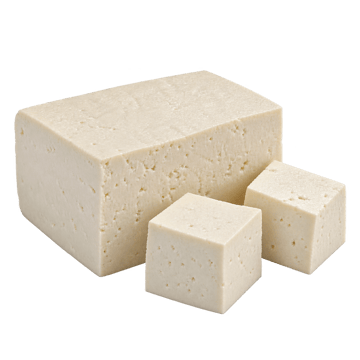
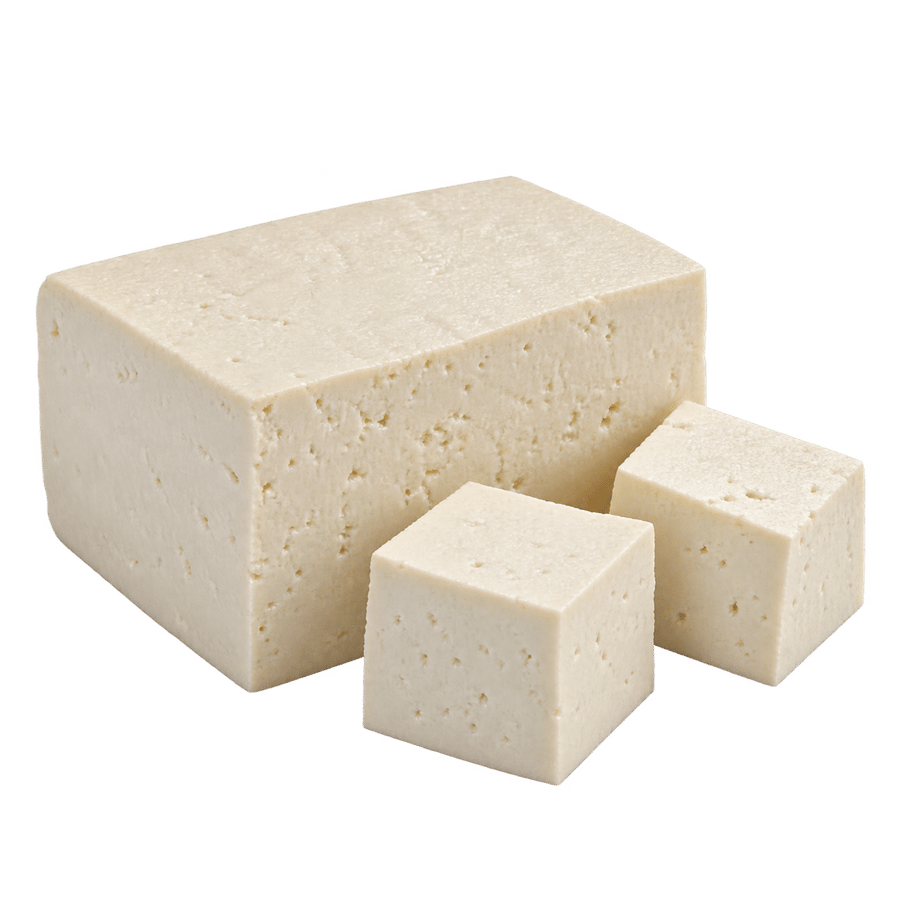
| Tofu, firm | 1/2 cup | 22 g | 181 | 12.0 g |
| Tempeh | 3 oz | 17 g | 163 | 10.6 g |
| Edamame, shelled | 1 cup | 18 g | 188 | 9.8 g |
| Lentils, boiled | 1 cup | 18 g | 230 | 7.8 g |
| Black beans, boiled | 1 cup | 15 g | 227 | 6.7 g |
| Chickpeas, boiled | 1 cup | 15 g | 269 | 5.4 g |
| Pumpkin seeds | 1 oz | 9 g | 158 | 5.4 g |
| Whole wheat bread | 1 slice | 4 g | 81 | 4.9 g |
| Quinoa, cooked | 1 cup | 8 g | 222 | 3.7 g |
| Peanut butter | 2 tbsp | 7 g | 191 | 3.7 g |
| Almonds | 1 oz | 6 g | 164 | 3.7 g |
Two surprises. Quinoa, often sold as the complete plant protein, has 3.7 g of protein per 100 calories, the same as spaghetti and almonds. And tofu labels vary: USDA has two “firm” tofu records, one with 17.3 g of protein per 100 g and one with 9, so check yours.
A plant day that reaches the range
For a 140 lb adult, the range is 75 to 100 g and the meal line is 25 g.
| Meal | What | Protein | Calories |
|---|---|---|---|
| Breakfast | Tofu scramble with half a cup of firm tofu, and a slice of whole wheat toast | 26 g | 262 |
| Lunch | A cup of lentils with a cup of edamame | 36 g | 418 |
| Dinner | 3 oz of tempeh with a cup of quinoa | 25 g | 385 |
| Snack | An ounce of pumpkin seeds | 9 g | 158 |
| Total | 96 g | 1,223 |
Every meal clears 25 g, and the day lands near the top of the range. Soy is in all three meals, with lentils, quinoa and seeds mixed in.
Do you have to combine proteins at each meal?
You’ll still see advice to eat rice and beans together at the same meal. The 2018 lab work shows blends do cover each other’s gaps. Whether they need to be at the same meal is a separate claim, and the trials above didn’t test it. What the trials do show is that the total, mostly from soy or a mix, is enough. The 2025 to 2030 US guidelines ask vegetarians and vegans to “diversify plant protein sources for amino acid balance”, and we’d eat a mix over the day and not worry about matching every plate.
If you want to see the gaps, complete protein, charted shows every food’s nine essential amino acids against what adults need, and plant combos lets you pick two plant foods and see what they carry together. Grains and nuts are short on lysine, beans and soy aren’t, and peanut butter on whole wheat stays short because both are low in it.
The case that animal protein still wins
The best case against plants comes from the same 2025 review. Across all ages, plant protein built a bit less muscle than animal protein, and the gap was clearest in younger adults and with single non-soy proteins. Plant-based diets as a whole, across 7 trials, also built less.
That’s fair, and it’s why the advice here is specific. The gap closes with soy, with blends, and with enough total protein, which is what the vegan trial had. A plant diet that’s low in protein, or built on one weak source, does fall behind. The 2025 GLP-1 advisory, for its part, encourages beans, peas, lentils and whole grains as protein foods for general health.
6 sources
- Reid-McCann et al., Effect of plant versus animal protein on muscle mass, strength, physical performance, and sarcopenia: a systematic review and meta-analysis of randomized controlled trials, Nutrition Reviews, 2025pmc.ncbi.nlm.nih.gov
- Monteyne et al., Vegan and omnivorous high protein diets support comparable daily myofibrillar protein synthesis rates and skeletal muscle hypertrophy in young adults, Journal of Nutrition, 2023pmc.ncbi.nlm.nih.gov
- Gorissen et al., Protein content and amino acid composition of commercially available plant-based protein isolates, Amino Acids, 2018pmc.ncbi.nlm.nih.gov
- US Department of Agriculture and US Department of Health and Human Services, Dietary Guidelines for Americans, 2025 to 2030, January 2026cdn.realfood.gov
- Mozaffarian et al., Nutritional priorities to support GLP-1 therapy for obesity: a joint advisory, Obesity Pillars, 2025pmc.ncbi.nlm.nih.gov
- USDA FoodData Central, SR Legacy records 172388, 172475, 172448, 174272, 168411, 172421, 173735, 173757, 170556, 172688, 174899, 174266, 170567, 168917, 169737, 168878 and branded record 2495506fdc.nal.usda.gov