How much protein do you need when pregnant or breastfeeding?
On this page
The US RDA in pregnancy is 1.1 g of protein per kg of body weight a day, or 71 g, and it applies to the second half of pregnancy. In the first half it’s the same as before you were pregnant, 0.8 g per kg. While breastfeeding it’s 1.3 g per kg, also listed as 71 g. Your midwife or doctor sets anything beyond normal food.
What we’d do
Treat the RDA as the floor and let your meals land above it. Eat some protein at every meal from a wide mix of foods: eggs, dairy, beans and lentils, meat, and two or three servings a week of low-mercury fish like salmon, sardines or canned light tuna. Skip the handful of foods that can carry Listeria, or heat them until they steam. Talk to your midwife or doctor about a prenatal vitamin, and about any powder, shake or number above the RDA. The other ranges on this site are written for adults who aren’t pregnant, and nothing here is weight-loss advice for pregnancy.
If you remember three things
- 71 g a day in the second half of pregnancy is the US RDA, 1.1 g per kg. The first half is the same as before.
- One small study measured needs higher than that, so we’d treat 71 g as a minimum and not aim for the bare number.
- Eat low-mercury fish two or three times a week, and heat deli meat until it steams or skip it, along with raw milk and refrigerated smoked fish.
Why the advice is all over the place
Protein advice in pregnancy runs from “eat for two” to big extra amounts per kg in older guides. Gyroscope’s own first Protein Guide gave a higher number than the one below. The official figure most people find is a single number with no explanation, and it’s hard to know which one to trust when you care this much about getting it right.
The US numbers are the place to start, because they’re what your care team works from and they say exactly when the extra kicks in. The rest of this page is what to eat to get there, which foods to skip, and the one study that suggests the real need is higher.
The US numbers
| Stage | RDA | At the reference weight |
|---|---|---|
| Not pregnant, adult women | 0.8 g per kg | 46 g |
| First half of pregnancy | 0.8 g per kg | 46 g |
| Second half of pregnancy | 1.1 g per kg | 71 g |
| Breastfeeding | 1.3 g per kg | 71 g |
From the US Dietary Reference Intakes (Institute of Medicine, 2005). The tables say the pregnancy figure is “only for the second half of pregnancy”, and they set no upper limit for protein at any stage.
It’s a bit like a building site that picks up speed. The work in the later months is bigger, and that’s when more materials get delivered. In the first months your needs haven’t changed, so there’s no reason to force extra protein when nausea makes food hard.
Do pregnant women need more than the RDA?
One study says they might. In 2015, Trina Stephens and colleagues in Canada measured protein needs in 29 healthy pregnant women with a lab method. The average need came out at about 1.22 g per kg early in pregnancy and 1.52 g per kg late in pregnancy.
Those are average needs rather than recommended intakes, so they line up against the US average requirement for pregnancy, 0.88 g per kg, and the RDA is set above that. The study had 29 women, and the US numbers haven’t changed since. But it’s a good reason to treat 71 g as a floor and let your meals land above it.
What 71 g looks like
| Food | Protein | Calories |
|---|---|---|
| A 5.3 oz cup of plain nonfat Greek yogurt | 15.3 g | 88 |
| 2 large eggs | 12.6 g | 144 |
| 3 oz cooked salmon | 18.8 g | 175 |
| 1 cup cooked lentils | 17.9 g | 230 |
| 1 cup 2% milk | 8.1 g | 122 |
| The day | 72.7 g | 759 |
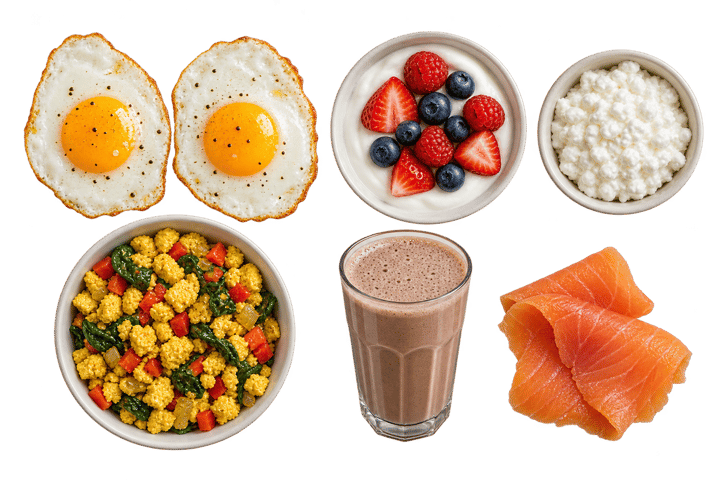
Grams and calories from USDA FoodData Central. All five are foods the 2025 to 2030 guidelines name for pregnancy: dairy, choline-rich eggs, omega-3 seafood and folate-rich legumes. Eggs and the yogurt make a 28 g breakfast, and the rest spreads over lunch and dinner. The meal builder lets you tap foods onto a plate and see the grams.
Eat fish, and pick the low-mercury kinds
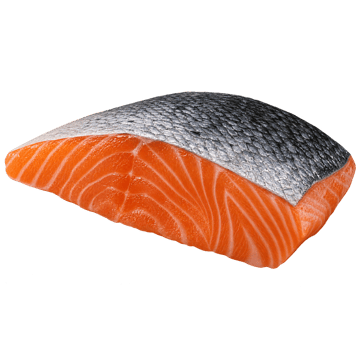
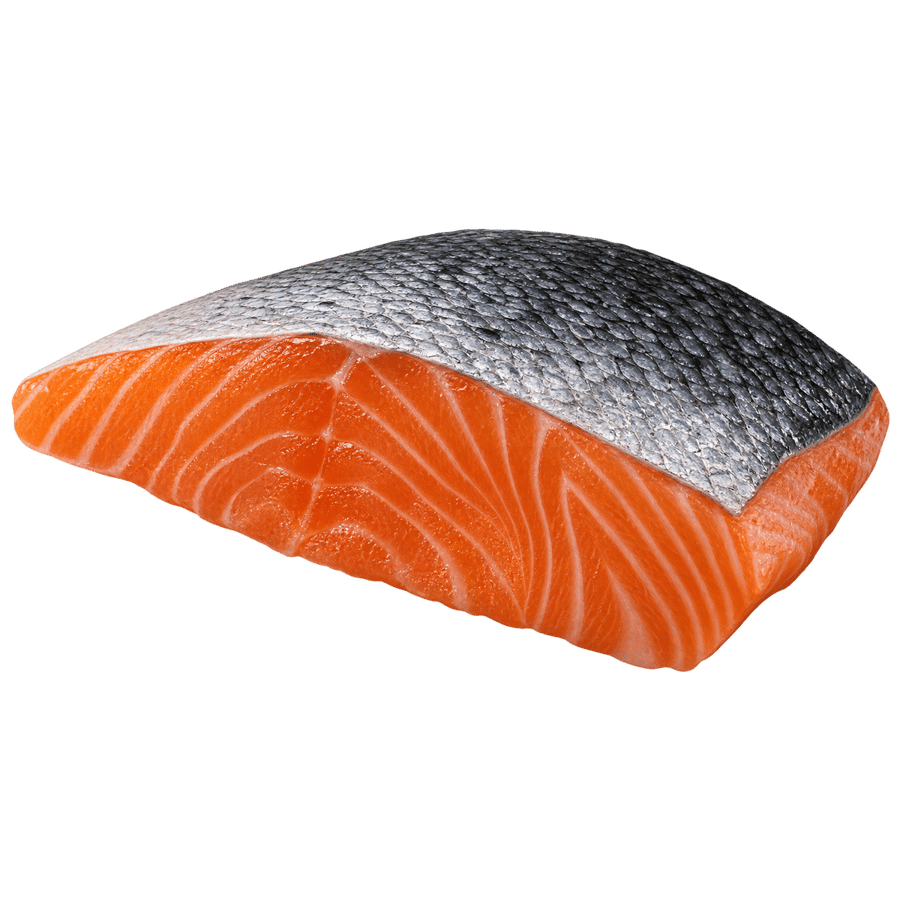
Fish is one of the best protein foods in pregnancy, and the one with the most confusing warnings. The FDA and EPA advice for anyone pregnant or breastfeeding is to eat 2 to 3 servings a week from their “Best Choices” list, where a serving is 4 oz, about the size of your palm. The FDA page puts it as 8 to 12 oz of fish a week.
- Best choices include salmon, shrimp, canned light tuna, cod, pollock, tilapia, freshwater trout, catfish, sardines and Atlantic mackerel.
- Skip king mackerel, marlin, orange roughy, shark, swordfish, tilefish from the Gulf of Mexico and bigeye tuna, the FDA’s highest-mercury list.
Three of the leanest protein foods on this site, shrimp, canned light tuna and cod, are on the best choices list.
Foods to skip or heat
Pregnant women are among the groups at higher risk from Listeria, and a few protein foods are where it hides. The CDC’s list:
| Skip | Or choose |
|---|---|
| Unheated deli meat, cold cuts, hot dogs, and fermented or dry sausages | The same foods reheated to 165°F or until steaming hot |
| Raw (unpasteurized) milk, yogurt and ice cream | Pasteurized milk, yogurt and ice cream |
| Any cheese made with raw milk | Cottage cheese, string cheese, feta and mozzarella made with pasteurized milk |
| Refrigerated smoked fish | Smoked fish in sealed packages that don’t need the fridge, or smoked fish cooked into a dish |
Most of the protein foods on this site are already on the safe side of that list, like cooked meat and fish, Greek yogurt and cottage cheese made from pasteurized milk, and beans and lentils.
The nutrients that come with the protein
The 2025 to 2030 US guidelines name iron, folate and iodine as the top priorities in pregnancy. They suggest a wide range of nutrient-dense foods, including iron-rich meats, folate-rich greens and legumes, choline-rich eggs, calcium-rich dairy, and low-mercury seafood rich in omega-3 fats like salmon, sardines and trout. They also say to talk to your health care professional about a daily prenatal vitamin.
Vitamin B12 rides along with animal protein. It’s found naturally in fish, meat, poultry, eggs and milk, and it isn’t in plant foods unless they’re fortified. The RDA is 2.6 mcg a day in pregnancy and 2.8 mcg while breastfeeding. If you’re vegan, B12 needs a plan, and our vegan guide covers it.
Breastfeeding
The RDA while breastfeeding is 1.3 g per kg, listed as 71 g a day at the reference weight. The guidelines say breastfeeding increases energy and nutrient needs, and suggest foods like B12-rich meats, poultry, eggs and dairy, omega-3 seafood, folate-rich legumes and vitamin A-rich vegetables. They also say to ask your health care professional whether supplements are needed. The same fish list applies while breastfeeding.
Before you change anything
- Powders, shakes and bars. Ask your midwife or doctor first, and the same for any target above the RDA.
- Kidney disease, diabetes or high blood pressure. Your care team sets your numbers in pregnancy.
- Nausea. Early pregnancy is when the RDA is lowest, the same as before you were pregnant. Tell your midwife or doctor if you can’t keep food or fluids down.
- Exercise and creatine. exercise.guide covers exercise in pregnancy, and creatine.guide covers creatine in pregnancy.
Our safety guide covers everyone who sets their own number, including kidney disease and teenagers.
What the guidelines say
Checked November 15, 2026:
- US Dietary Reference Intakes (Institute of Medicine, 2005): 1.1 g per kg (71 g) a day in the second half of pregnancy, 1.3 g per kg (71 g) while breastfeeding, the same as before pregnancy in the first half, with no upper limit set.
- The 2025 to 2030 Dietary Guidelines for Americans (January 2026): diverse nutrient-dense foods, with iron, folate and iodine as the top priorities, low-mercury seafood, and a conversation with your health care professional about a prenatal vitamin.
- FDA and EPA advice about eating fish: 2 to 3 servings a week from the best choices list, 4 oz a serving, and none from the highest-mercury list.
- CDC Listeria prevention: unheated deli meats and hot dogs, raw-milk dairy and refrigerated smoked fish are skipped or heated until steaming.
8 sources
- Health Canada, Dietary Reference Intakes tables, reference values for macronutrients (Institute of Medicine, 2005)canada.ca
- National Academies, Dietary Reference Intakes: Recommended Dietary Allowances and Adequate Intakes, total water and macronutrientsnationalacademies.org
- Stephens et al., Protein requirements of healthy pregnant women during early and late gestation are higher than current recommendations, Journal of Nutrition, 2015pubmed.ncbi.nlm.nih.gov
- US Department of Agriculture and US Department of Health and Human Services, Dietary Guidelines for Americans, 2025 to 2030, January 2026cdn.realfood.gov
- US Food and Drug Administration, Advice about eating fish, for those who might become or are pregnant or breastfeedingfda.gov
- CDC, Preventing Listeria infectioncdc.gov
- MedlinePlus, Vitamin B12, US National Library of Medicinemedlineplus.gov
- USDA FoodData Central, SR Legacy records 170894 (nonfat Greek yogurt), 171287 (egg), 175168 (salmon), 172421 (lentils) and 171267 (2% milk)fdc.nal.usda.gov