How much protein on a GLP-1 like Ozempic or Mounjaro?
On this page
On a GLP-1 drug, aim for the same typical range as anyone losing weight: 1.2 to 1.6 g of protein per kg a day, counted near your goal if you have a lot to lose. Eat it in small meals with the protein first, and lift at least twice a week. The 2025 GLP-1 advisory also allows a flat 80 to 120 g a day.
What we’d do
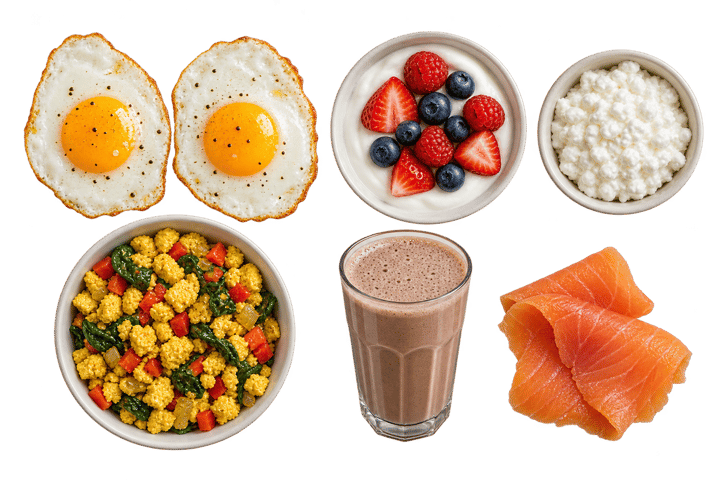
Find your range in the calculator, then plan small meals built around one protein food each, since a big plate is the hard part when you’re not hungry. Eat the protein on the plate first. Keep a few foods around that pack a lot of protein into a small amount, like nonfat Greek yogurt, 1% cottage cheese, eggs, tuna and shrimp, and use a shake on days when solid food won’t go down. Lift twice a week so the muscle has a reason to stay. On a bad day, the advisory’s 80 g is a fair floor. The Gyroscope app personalizes yours.
If you remember three things
- About a quarter of the weight lost on tirzepatide was lean mass. The placebo group lost the same share, so it comes with the weight loss itself.
- Protein and lifting are how anyone keeps that share small. The advisory names both.
- Small meals, protein first. Build each one around a dense protein food like Greek yogurt, cottage cheese, tuna or chicken.
This page follows the 2025 joint advisory on nutrition with GLP-1 drugs from the American College of Lifestyle Medicine, the American Society for Nutrition, the Obesity Medicine Association and the Obesity Society, and the published body scans from the SURMOUNT-1 and STEP 1 trials, all checked on November 14, 2026. It gives no advice on the drugs themselves. Your prescriber decides anything about dose, timing or stopping.
Why protein gets harder on a GLP-1
The drugs in this group, semaglutide (sold as Ozempic and Wegovy) and tirzepatide (Mounjaro and Zepbound), turn appetite down. That’s how they work, and it’s why people lose weight on them. But they turn it down for everything, protein included. The advisory notes that reduced appetite and changes in taste can make enough protein hard to reach.
At the same time, a big loss in a short time is exactly when protein counts most. You’re eating less and losing a lot, and the body takes some lean mass with the fat unless something tells it not to.
How much of the weight lost is muscle?
The answer depends on which trial you look at, so here they are one by one.
Tirzepatide, 72 weeks
160 people with body scans, part of the SURMOUNT-1 trial. Look and colleagues, 2025
People on the drug lost 21.3% of their weight, 33.9% of their fat and 10.9% of their lean mass. About 75% of the weight lost was fat and 25% lean, the same split as in the placebo group.
A substudy of 160 of the trial’s 2,539 people, 73% of them women.
Semaglutide, 68 weeks
140 people with body scans, part of the STEP 1 trial
Fat fell 19.3% and lean mass 9.7%. Of 13.6 kg lost, 8.3 kg was fat and 5.3 kg (38%) lean. The advisory notes muscle is about half of lean mass, so muscle was roughly 20% of the loss.
Lean mass includes organs and water, so it isn’t all muscle.
Semaglutide in routine care, 12 months
115 people with obesity, 106 finished. Alissou and colleagues, SEMALEAN, 2025
Lean mass fell about 3 kg by month 7 and then held steady. Grip strength rose by 4.5 kg over the year.
No comparison group, so it can’t show what the drug did on its own.
You’ll see “39% of the weight lost was muscle” quoted a lot. The STEP 1 figure is 38% of the fat and lean tissue lost, it’s lean mass and not muscle, and on tirzepatide the share was a quarter, the same as on placebo.
How much protein should you aim for?
The typical range is 1.2 to 1.6 g per kg of body weight a day, from the 2025 to 2030 US Dietary Guidelines. With a lot to lose it counts from your goal plus a fifth of today’s weight, the same rule used across this site, bodyfat.guide and tdee.guide.
Take a 5 foot 6 woman at 210 lb aiming for 160. She has more than a fifth to lose, so her range counts from 202 lb: 110 to 145 g a day, with a meal line of 35 g.
The 2025 advisory gives options instead of one number. Here they are in its own words, under this site’s range, with what each comes to for her:
| The option | For her |
|---|---|
| This site’s range, the same on bodyfat.guide and tdee.guide (1.2 to 1.6 g per kg, counted near the goal) | 110 to 145 g, counted from 202 lb |
| “Higher targets, such as 1.2–1.6 g/kg body weight/day, have also been proposed during active weight reduction” | About 115 to 150 g, counted from 210 lb |
| “protein recommendations during major weight reduction are based on adjusted body weight range between 1.2 and 2.0 g/kg of adjusted body weight/day” | About 80 to 135 g, with adjusted weight worked out as about 150 lb (an ideal weight of about 130 lb plus a quarter of the rest, one common formula) |
| “A protein intake of 1.5 g per kilogram of lean body mass (FFM) per day is considered more accurate but requires body composition data” | It needs a body scan to measure her lean mass, so there’s no number for her without one |
| “setting an absolute protein target of 80–120 g/day may enhance adherence while ensuring adequate intake” | 80 to 120 g |
The advisory also sets two edges. Intake “should not fall below 0.4–0.5 g/kg/day, as this can lead to muscle atrophy and functional impairments”, and “prolonged intake above 2 g/kg/day should be avoided due to potential adverse health effects”. For her, at 210 lb, that’s about 40 to 50 g at the bottom and about 190 g at the top, and every option above sits between them.
It says “it’s unclear whether these goals should be based on actual body weight, corrected (adjusted or ideal) body weight, or fat-free mass”, so nobody knows the exact best number on these drugs yet.
We’d aim for the network range, and treat the advisory’s 80 g as the floor on days when eating is hard. With appetite turned down, even 80 g takes planning.
Small meals, protein first
The advisory suggests eating the protein-rich foods first in a meal, so they’re eaten before you’re full. We’d also make the meals small, each one something you’d actually finish.
These foods pack the most protein into the fewest calories and the smallest serving:
| Food | Serving | Protein | Calories |
|---|---|---|---|
| Shrimp, cooked | 3 oz | 20 g | 84 |
| Canned light tuna in water | 3 oz | 17 g | 73 |
| Cod, cooked | 3 oz | 19 g | 89 |
| Turkey breast, roasted | 3 oz | 25 g | 116 |
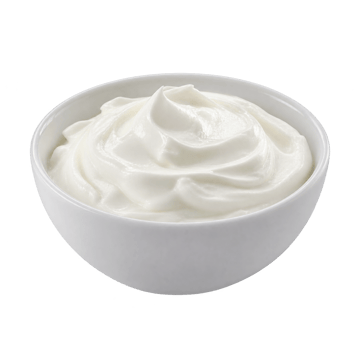
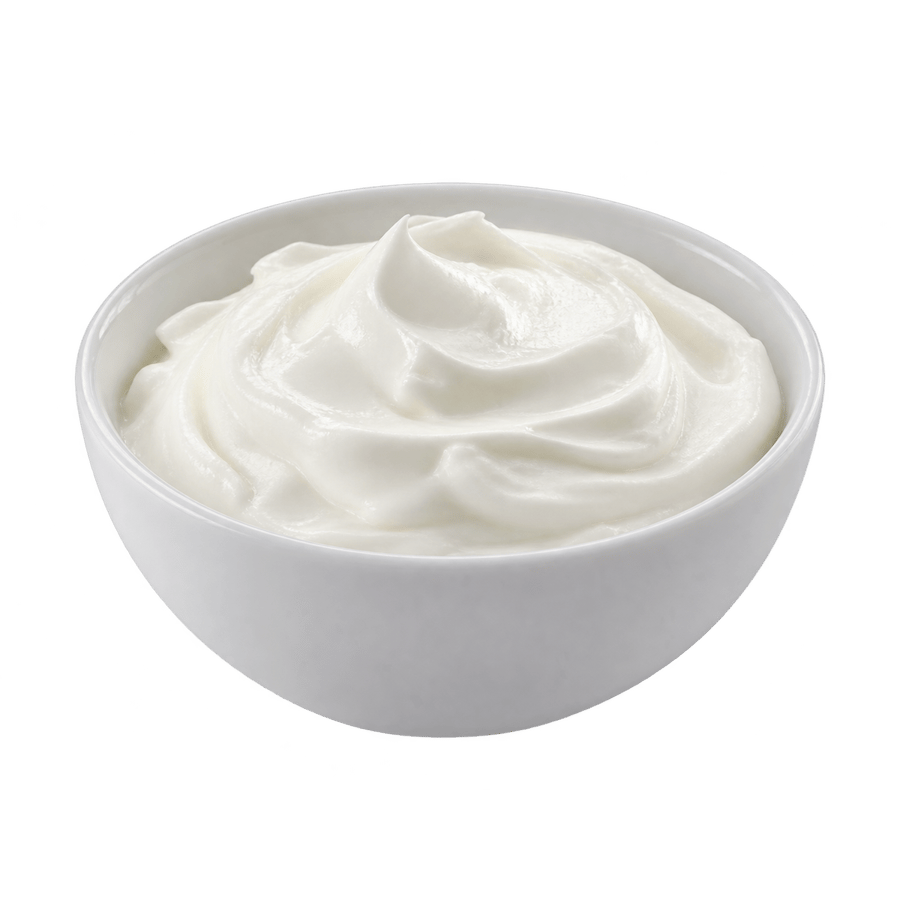
| Nonfat Greek yogurt | 5.3 oz cup | 15 g | 88 |
| 1% cottage cheese | 1/2 cup | 14 g | 81 |
| Egg | 1 large | 6 g | 72 |
| Whey protein powder | 1 scoop | 25 g | 113 |
A day for the woman above, in small meals:
- A Greek yogurt, half a cup of 1% cottage cheese and an egg: 36 g, 241 calories.
- 3 oz of roast turkey breast and half a cup of 1% cottage cheese: 39 g, 197 calories.
- 4 oz of grilled chicken breast with vegetables and a slice of whole wheat bread: 39 g, 252 calories before the vegetables.
- If there’s room, a scoop of whey in water: 25 g, 113 calories.
The three meals alone make about 113 g of protein in about 690 calories, inside her range, and each one clears her 35 g line. The shake takes the day to about 138 g. Food first works on a GLP-1 too, if you want to and can, and how to get enough protein without powder has more days built from food.
Bigger meals aren’t wasted either. In a 2023 trial, young men who drank 100 g of protein at once kept building muscle for more than 12 hours. If your appetite is better at one time of day, it’s fine to eat more protein then.
If you can’t keep fluids down, call your prescriber. Fluids come before any protein number. The advisory notes dehydration from nausea and vomiting as a risk for the kidneys.
Lift twice a week
The advisory names lifting alongside protein as the way to protect muscle and bone. The US activity guidelines ask every adult for at least 2 days of muscle work a week.
You don’t need a gym. The CDC counts lifting weights, resistance bands, push-ups and digging in a garden, done until one more repetition is hard without help, which is usually about 8 to 12 times. The SEMALEAN patients got stronger while they lost weight, and grip strength is one of the simplest things to watch.
Count it when eating is hard
When you’re barely eating, guessing your protein is easy to get wrong in both directions. Count three normal days, meal by meal, in the meal line calculator, and set the total against your range. To see whether the muscle is holding, retest something simple every couple of months, like your push-ups or your grip.
The case that the drugs take muscle
Some doctors and articles warn that GLP-1 drugs eat muscle. The concern is fair, because a big loss always takes some lean mass.
The trials point at the weight loss itself. In SURMOUNT-1, placebo lost the same quarter. In SEMALEAN, lean mass stopped falling after seven months and grip got stronger. What isn’t known yet is exactly how much protein and lifting add on these drugs. Until trials show it, we’d do what works for anyone losing weight, which is to reach your protein and lift.
bodyfat.guide covers how the GLP-1 drugs work and whether they make you lose muscle from the fat loss side.
10 sources
- Mozaffarian et al., Nutritional priorities to support GLP-1 therapy for obesity: a joint advisory from the American College of Lifestyle Medicine, the American Society for Nutrition, the Obesity Medicine Association, and the Obesity Society, Obesity Pillars, 2025pmc.ncbi.nlm.nih.gov
- Look et al., Body composition changes during weight reduction with tirzepatide in the SURMOUNT-1 study of adults with obesity or overweight, Diabetes, Obesity and Metabolism, 2025pubmed.ncbi.nlm.nih.gov
- Wilding et al., Impact of semaglutide on body composition in adults with overweight or obesity: exploratory analysis of the STEP 1 study, abstractnewswise.com
- Alissou et al., Impact of semaglutide on fat mass, lean mass and muscle function in patients with obesity: the SEMALEAN study, Diabetes, Obesity and Metabolism, 2025pubmed.ncbi.nlm.nih.gov
- US Department of Agriculture and US Department of Health and Human Services, Dietary Guidelines for Americans, 2025 to 2030, January 2026cdn.realfood.gov
- Moore et al., Protein ingestion to stimulate myofibrillar protein synthesis requires greater relative protein intakes in healthy older versus younger men, Journals of Gerontology Series A, 2015pubmed.ncbi.nlm.nih.gov
- Trommelen et al., The anabolic response to protein ingestion during recovery from exercise has no upper limit in magnitude and duration in vivo in humans, Cell Reports Medicine, 2023pmc.ncbi.nlm.nih.gov
- CDC, Adult activity: an overview, 2023cdc.gov
- CDC, What counts as physical activity for adults, 2023cdc.gov
- USDA FoodData Central, SR Legacy records 170894, 173417, 175180, 173709, 171956, 171287, 173180, 174516, 171534 and 172688fdc.nal.usda.gov