Can eating more protein make you gain weight?
On this page
Yes, but only through its calories, the same as any food. Protein has 4 calories per gram, so 100 g is 400 calories. It does come with a discount: digesting protein uses up 20 to 30% of its calories, against 0 to 3% for fat. Swap protein in for other food and you’ll usually eat less. Add it on top and it counts.
People get two opposite messages. Fitness culture treats protein as a free food that turns into muscle, so a few extra shakes can’t hurt. Other people warn that “extra protein just turns to fat”. Both miss the simple part. Your weight follows the calories you eat against the calories you burn, and protein’s calories count, with a smaller cut than fat’s or carbs’.
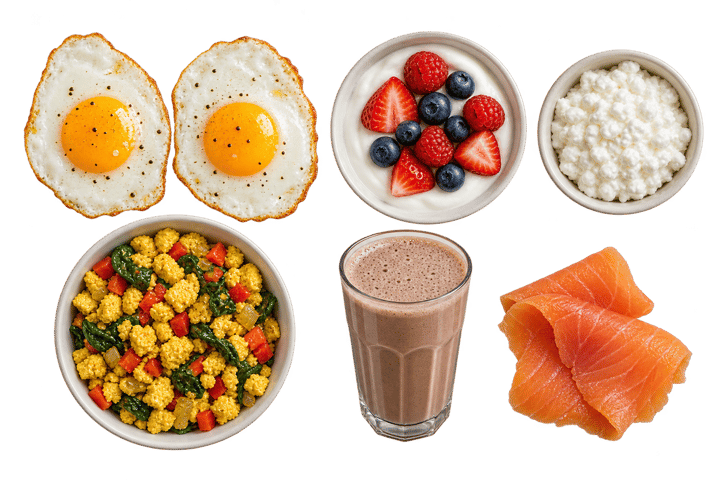
We’d raise protein by swapping it in for something else. Trade the bagel for Greek yogurt and eggs, trade a side of chips for a side of cottage cheese, and the day’s calories stay about the same or drop. A shake added to a day that was already enough food is just more food.
Protein is like money changed at an airport kiosk. You hand over 100 calories and get back only 70 to 80 you can use, because the body keeps a big fee for handling it.
The calorie math
| Protein | Calories | Spent digesting it | Left over |
|---|---|---|---|
| 25 g (a whey scoop) | 100 | 20 to 30 | 70 to 80 |
| 100 g | 400 | 80 to 120 | 280 to 320 |
| 150 g | 600 | 120 to 180 | 420 to 480 |
The 20 to 30% figure comes from a 2004 review by Klaas Westerterp, who also put carbs at 5 to 10% and fat at 0 to 3%. tdee.guide has the whole picture on what digestion burns.
A shake isn’t free, though. One scoop of whey made with a cup of 2% milk is about 235 calories (USDA). One a day on top of your normal eating adds about 1,650 calories a week.
Does protein make you eat less?
Sometimes. In a 2014 review of 38 trials, people on diets with a smaller share of protein ate more calories overall. But the effect seems to work in one direction. In a 22-person trial described by David Raubenheimer and Stephen Simpson, dropping protein from 15% to 10% of calories made people eat 12% more, mostly from snacks. Raising it to 25% didn’t make them eat less.
Low protein can make you overeat, while high protein doesn’t stop you eating. See the myth that more protein makes you eat less.
When the scale goes up for a good reason
If you lift and eat enough protein, some of the weight you gain or keep can be muscle. In a 2016 trial, young men on a hard diet with lifting and 2.4 g of protein per kg gained 2.6 lb (1.2 kg) of lean mass in four weeks while losing 10.6 lb (4.8 kg) of fat. The scale went down by less than the fat did, and that’s a good trade. A tape around the waist or a bodyfat check tells the two apart better than the scale. bodyfat.guide’s fat or muscle check does that.
What we’d do
- Find your range in the daily range calculator. The Gyroscope app personalizes yours.
- Swap it in. Check where your day lands with Is my number enough?, which also shows the calories in your protein.
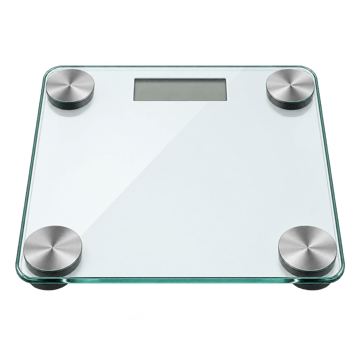
- Watch the trend. If the scale climbs and your waist does too, the extra is calories, whatever form they came in.
6 sources
- USDA National Agricultural Library, Food and Nutrition Information Center, calories per gram of proteinnal.usda.gov
- Westerterp, Diet induced thermogenesis, Nutrition and Metabolism, 2004pmc.ncbi.nlm.nih.gov
- Gosby et al., Protein leverage and energy intake, Obesity Reviews, 2014pubmed.ncbi.nlm.nih.gov
- Raubenheimer and Simpson, Protein appetite as an integrator in the obesity system: the protein leverage hypothesis, Philosophical Transactions of the Royal Society B, 2023pmc.ncbi.nlm.nih.gov
- Longland et al., Higher compared with lower dietary protein during an energy deficit combined with intense exercise promotes greater lean mass gain and fat mass loss, American Journal of Clinical Nutrition, 2016pubmed.ncbi.nlm.nih.gov
- USDA FoodData Central, SR Legacy records 173180 (whey), 171267 (2% milk) and 170894 (nonfat Greek yogurt)fdc.nal.usda.gov