How much protein do I need?
Your weight and your goal set a typical range. Under it is too low, and many people are. The Gyroscope app personalizes yours.
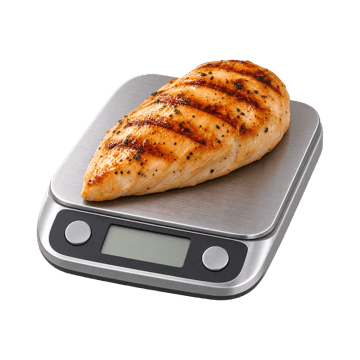
100to130 ga day
The typical range for 180 lb. Under 100 g is too low.
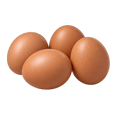

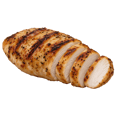
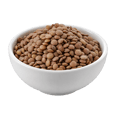
- Each of three meals
- 35 to 45 g
- Your meal line
- 35 g at every meal
The low end of your range as food
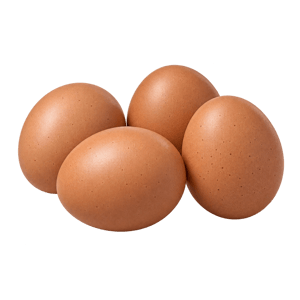
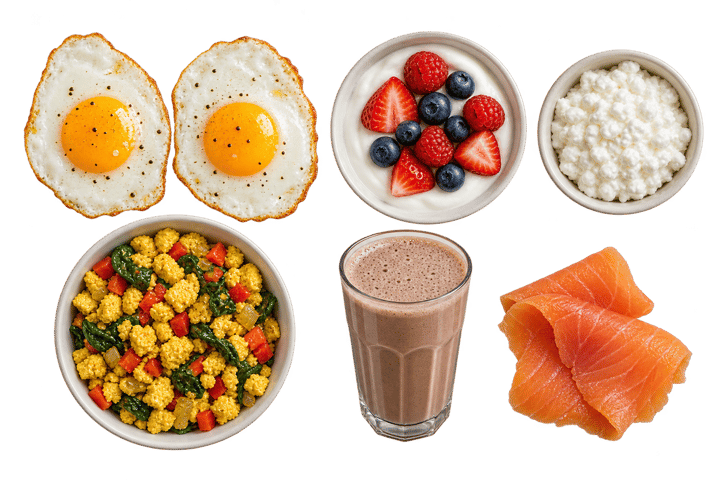
 3 large eggs19 g
 1 cup of nonfat Greek yogurt (5.3 oz each)15 g
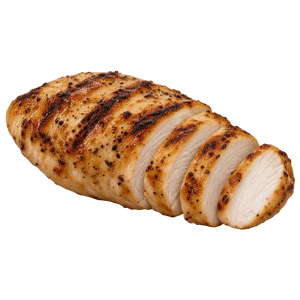
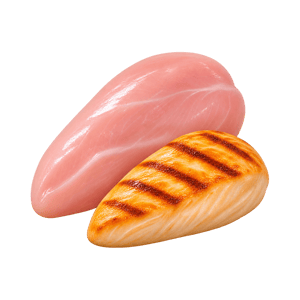
 4 oz grilled chicken breast35 g
 1 cup of cooked lentils18 g
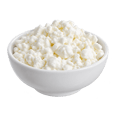
 1/2 cup of 1% cottage cheese14 g
- Together101 g
The Gyroscope app personalizes yours. These are typical ranges to show you if you're too low, and many people are.
What your result means and what to do next
- Under your range. You're short, like many people. The missing grams are usually at breakfast and lunch, so check those two in the meal line calculator and add one lean food to each meal that misses, like a Greek yogurt, two eggs or a can of tuna.
- Inside your range. Your day is enough. Make sure each meal reaches your meal line, and lift at least twice a week so the protein has something to build.
- Above your range. In the trials, healthy kidneys showed no harm. The extra mostly costs calories and money, so trim it if you're not lean and lifting hard.
- Don't know what you eat now? Count three normal days, or tap your usual meals into the quiz and get your day against your range in two minutes.
Get it from food first if you want to and can. How to get enough protein without powder has two full days that land in the range.
How it works
The typical range is 1.2 to 1.6 g of protein per kg of body weight a day, from the 2025 to 2030 US Dietary Guidelines, out in January 2026. At 180 lb that's 100 to 130 g. At 140 lb it's 75 to 100 g, and at 200 lb it's 110 to 145 g.
It counts from your weight today. If you have more than a fifth of your weight to lose, it counts from your goal plus a fifth of today's weight, so a big loss doesn't push the number past what your muscle needs. 250 lb aiming for 180 counts as 230 lb, and gives 125 to 165 g.
Lean people who lift hard while dieting need more. A 2014 review of six studies put them at 2.3 to 3.1 g per kg of lean mass, the part of you that isn't fat. Add your bodyfat above to see it.
Why 0.8 g per kg isn't the target
The 0.8 g per kg you still see on many sites is the RDA, the amount set to cover basic needs in nearly all healthy adults. Think of it as the minimum payment on a card: it keeps you out of trouble, and it was never the plan. The guideline's Scientific Foundation report puts the average American adult at about 1 g per kg a day, under the new range.
One number across the guides
These are the same ranges as the protein calculators on bodyfat.guide and tdee.guide, so you get the same grams wherever you check. This site adds the meal line and the food. If you have kidney disease, your doctor sets the number.
5 sources
- US Department of Agriculture and US Department of Health and Human Services. Dietary Guidelines for Americans, 2025 to 2030. January 2026cdn.realfood.gov
- Scientific Foundation for the Dietary Guidelines for Americans, 2025 to 2030cdn.realfood.gov
- National Academies. Dietary Reference Intakes tablesnationalacademies.org
- Devries MC, Sithamparapillai A, Brimble KS, et al. Changes in kidney function do not differ between healthy adults consuming higher- compared with lower- or normal-protein diets: a systematic review and meta-analysis. Journal of Nutrition, 2018pubmed.ncbi.nlm.nih.gov
- Helms ER, Zinn C, Rowlands DS, Brown SR. A systematic review of dietary protein during caloric restriction in resistance trained lean athletes: a case for higher intakes. International Journal of Sport Nutrition and Exercise Metabolism, 2014pubmed.ncbi.nlm.nih.gov