I'm vegetarian. How do I get enough protein?
On this page
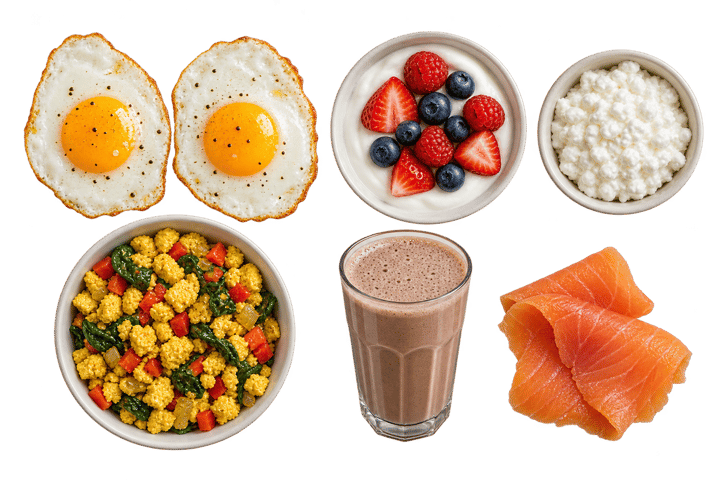
Eggs and dairy make it easy. They carry every essential amino acid with room to spare, and nonfat Greek yogurt, 1% cottage cheese and egg whites give you about as much protein per calorie as chicken breast. Aim for the same 1.2 to 1.6 g per kg a day as anyone, about 100 to 130 g at 180 lb, and put eggs, dairy, soy or lentils at every meal. The Gyroscope app personalizes yours.
What we’d do
Get your number from the daily range calculator. Build breakfast around eggs, Greek yogurt or cottage cheese, since breakfast is where most people run short. Let lunch and dinner lean on beans, lentils and tofu, with a dairy food beside them to top up the grams. Go easy on cheese as your main protein: an ounce of cheddar has 6.5 g of protein and 114 calories, so it adds fat faster than protein. And ask your doctor about iron and vitamin D, two of the gaps the US guidelines flag for vegetarians. The Gyroscope app personalizes yours.
If you remember three things
- Eggs and dairy meet the adult amino acid pattern, and they fill the gap in grains. A peanut butter sandwich is short on lysine until you add a cup of milk.
- Pick the lean ones. Egg whites, nonfat Greek yogurt and 1% cottage cheese give 17 to 21 g of protein per 100 calories. Cheddar gives 5.7.
- Vegetarian diets often fall short in vitamins D and E, choline and iron, the 2025 to 2030 US guidelines say.
Why vegetarians get the protein question
Tell people you’re vegetarian and you’ll hear the same question vegans get: where do you get your protein? It’s a fair question for a vegan who hasn’t planned meals. For most vegetarians it barely applies, because eggs and dairy are some of the best protein foods there are.
The trouble starts when meat comes off the plate and nothing takes its place. A vegetarian dinner of two cups of spaghetti has about 14 g of protein, sauce not counted. Swap the chicken in a sandwich for extra cheese and you’ve added more fat than protein. A vegetarian can run short by eating the meat-free version of a normal plate, with the meat left out and nothing put in its place.
This page is for people who eat eggs and dairy but no meat or fish. If you skip eggs and dairy too, our vegan guide is the one for you.
Do eggs and dairy make vegetarian protein complete?
Yes. We checked each food’s amino acids in USDA FoodData Central against the adult requirement pattern from FAO’s 2013 report on protein quality, and every egg and dairy food meets it with room to spare.
-
 Cottage cheese, 1%meets the pattern
100% -
 Egg whitemeets the pattern
100% -
 Greek yogurt, nonfatmeets the pattern
100% -
 Milkmeets the pattern
100% - Egg, wholemeets the pattern
100% -
 Black beansmeets the pattern
100% -
 Soy (tofu, tempeh, edamame)meets the pattern
100% -
 Lentilsshort on methionine and cysteine
98% -
 White riceshort on lysine
80% -
 Peanut buttershort on lysine
68% -
 Whole wheatshort on lysine
60%
The amino acid that makes the difference is lysine. The adult pattern asks for 45 mg of lysine per gram of protein. Milk carries about 84, Greek yogurt 86, cottage cheese 81 and a whole egg 73. Whole wheat has 27 and peanut butter 31, which is why both fall short on their own. (Soy above is USDA’s cooked soybean record, and whole wheat is its whole-wheat pita record, since their own rows don’t add up. How we worked it out.)
That makes dairy like the one missing ingredient in a recipe. Add it to a plate of grains and the whole plate works.
Here’s the example we like best. A peanut butter sandwich, 2 tbsp of peanut butter on two slices of whole wheat, has 15.1 g of protein and reaches only 64% of the pattern, because peanuts and wheat are both low in lysine. Drink a cup of 2% milk with it and the meal has 23.2 g of protein, and every essential amino acid is over the line, with lysine at 106%. That’s by USDA’s amino acid rows, before digestion.
DIAAS, the newer score, also counts how much of each amino acid gets digested. In a 2020 review that pooled pig studies of protein ingredients, casein, a milk protein, scored 117 and egg 101, against 91 for soy and 48 for wheat. Those numbers use the stricter pattern for young children, and the authors work at Avebe, a company that sells potato protein.
Which vegetarian foods give the most protein per calorie?
Eggs and dairy split into two groups. The lean ones are nearly as efficient as chicken breast. The rich ones, whole-milk cheese above all, carry more fat than protein.
- Egg white8 egg whites 143 cal
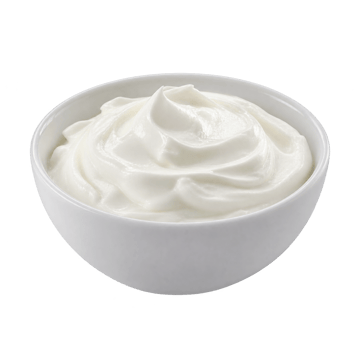
- Greek yogurt, plain nonfat2 cups (5.3 oz each) 174 cal
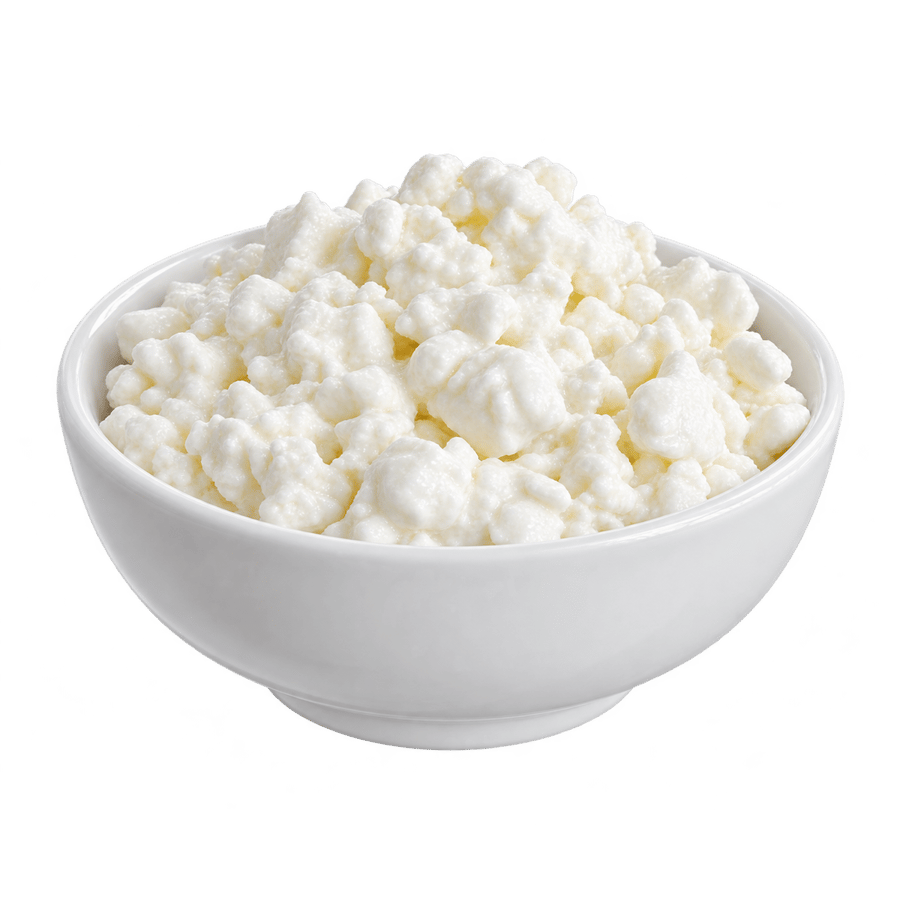
- Cottage cheese, 1%1 cup 174 cal
- Tofu, firm3/4 cup 250 cal
-
 Tempeh5 oz 284 cal
- Egg, whole, large5 large eggs 340 cal
- Lentils1 3/4 cups 386 cal
- Black beans2 cups 447 cal
- Milk, 2%3 3/4 cups 455 cal
-
 Cheddar4 1/2 oz 528 cal
-
 Chickpeas2 cups 555 cal
30 g of protein costs about 143 calories from egg whites, 174 from nonfat Greek yogurt or 1% cottage cheese, 250 from firm tofu, 340 from whole eggs and 386 from lentils. Cheddar costs about 528 calories for the same 30 g, more than black beans at 447.
That last one surprises people. Per calorie, cheddar has less protein than black beans: 5.7 g per 100 calories against 6.7. Cheese is a fine food and it tastes great on beans, but it works better as a topping than as the protein.
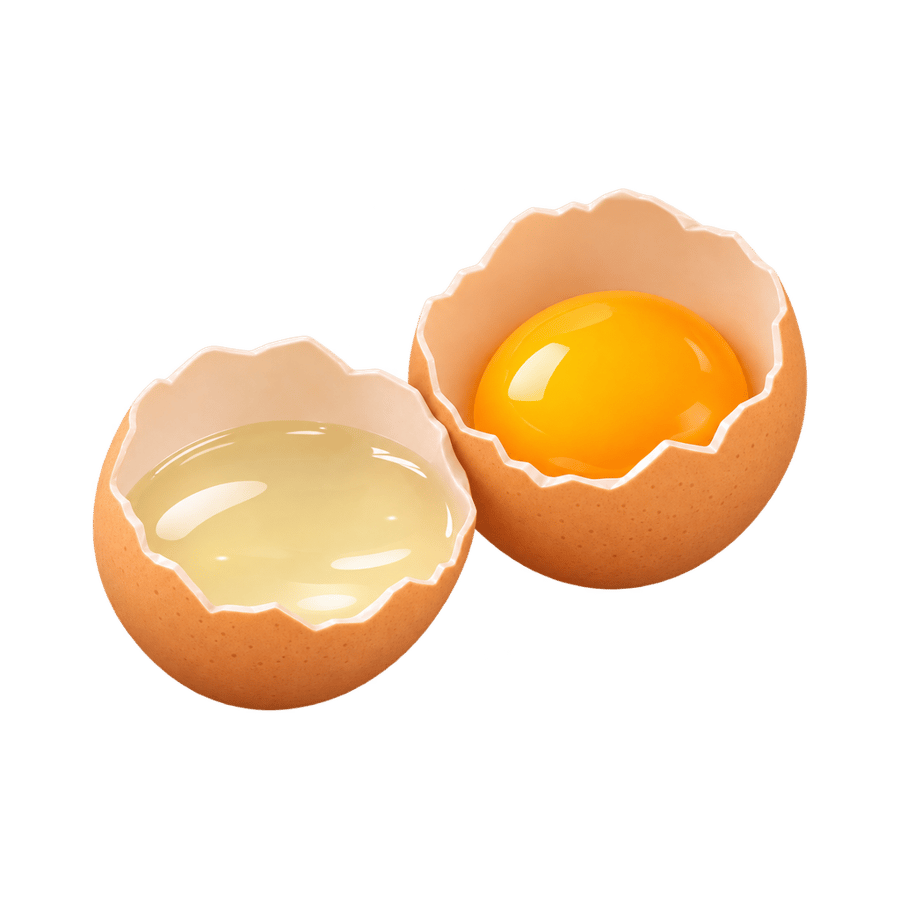
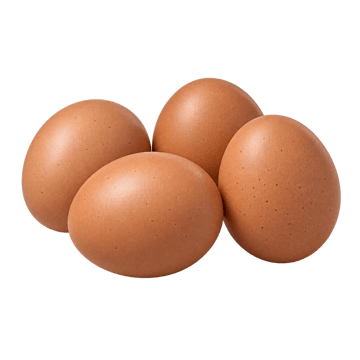
Eggs are a good example of the split. A whole large egg has 8.8 g of protein per 100 calories. The white alone has 21.0, more than grilled chicken breast at 20.2, because the yolk carries the fat. But the yolk also carries 43% of the egg’s protein, so whole eggs still pull their weight at breakfast. The per-calorie calculator ranks every food, and our rankings chart them per calorie, per dollar and by completeness.
What a vegetarian day at 180 lb looks like
For a 180 lb adult the range is 100 to 130 g and the meal line is 35 g.
| Meal | What | Protein | Calories |
|---|---|---|---|
| Breakfast | 2 large eggs and 1 cup of 1% cottage cheese | 40.6 g | 306 |
| Lunch | Burrito bowl: 1 cup black beans, 1 cup rice, 1 oz cheddar, and a 5.3 oz cup of nonfat Greek yogurt in place of sour cream | 41.3 g | 634 |
| Dinner | Stir fry with 1/2 cup firm tofu, 1/2 cup edamame and 1 cup rice | 35.3 g | 480 |
| Snack | 1 cup of 2% milk | 8.1 g | 122 |
| The day | 125.3 g | 1,542 |
All three meals clear the 35 g line, and the day lands inside the range with room for vegetables, fruit and anything else you like. Breakfast does the most work for the fewest calories, which is where eggs and cottage cheese earn their place.
meals.guide covers how vegetarians get enough protein at a meal from the plate’s side.
The nutrients to watch
The 2025 to 2030 US guidelines say “Vegetarian diets often fall short in vitamins D and E, choline, and iron”. They also say to “Monitor nutrient status periodically, especially for iron, vitamin B12, vitamin D, calcium, and iodine”, and to “Significantly limit highly processed vegan or vegetarian foods that can include added fats, sugars, and salt.”
Iron. Iron from vegetables, grains and supplements “is harder for the body to absorb”, MedlinePlus says, and foods rich in vitamin C, like citrus, strawberries, tomatoes and potatoes, increase how much you take in. The RDA is 18 mg a day for women 19 to 50 and 8 mg for men. Beans with tomatoes or peppers on the same plate help.
Choline. The guidelines call eggs “choline-rich” in their advice for pregnancy, so the eggs on this page help here too.
B12. B12 “is naturally found in animal foods such as fish, meat, poultry, eggs, milk, and milk products”, so a vegetarian who eats eggs and dairy gets some. MedlinePlus still lists vegetarians among the people at higher risk of running low, and it notes that fortified breakfast cereals “can be a good source of vitamin B12 for vegetarians”. Adults need 2.4 mcg a day. Ask your doctor whether to check your level.
If you’re pregnant or breastfeeding, B12 needs rise to 2.6 and 2.8 mcg a day, and your midwife or doctor should look at the gaps above with you. Our pregnancy guide has the protein numbers.
Should a vegetarian use protein powder?
You don’t need one, since eggs and dairy cover most days. But a scoop helps when breakfast is rushed. Whey comes from milk, so it fits a vegetarian diet, and one scoop has about 25 g of protein in 113 calories, 22.2 g per 100 calories. smoothie.guide compares whey and plant powders if you want a shake.
Can a vegetarian build muscle?
Yes. Vegetarians have it easier than vegans here, since milk is the protein many of the trials compared plants against. In a 2023 trial, 22 young adults lifted for 10 weeks on about 2 g of protein per kg a day, and a fully vegan group built as much muscle as the group eating meat. A 2025 review of the trials found soy built the same muscle as milk across 17 of them. A vegetarian with eggs, dairy and soy at hand has every option those trials had.
The protein needs a reason to become muscle, so lift at least twice a week. Our plants guide covers the trials, and the plant combos page shows which plant foods fill each other’s gaps on the days you skip dairy.
8 sources
- US Department of Agriculture and US Department of Health and Human Services, Dietary Guidelines for Americans, 2025 to 2030, January 2026 (Vegetarians and Vegans, Pregnant Women)cdn.realfood.gov
- MedlinePlus, Vitamin B12, US National Library of Medicinemedlineplus.gov
- MedlinePlus, Iron in diet, US National Library of Medicinemedlineplus.gov
- FAO, Dietary protein quality evaluation in human nutrition, FAO Food and Nutrition Paper 92, 2013 (Table 3, the adult pattern)fao.org
- Herreman, Nommensen, Pennings and Laus, Comprehensive overview of the quality of plant- and animal-sourced proteins based on the digestible indispensable amino acid score, Food Science and Nutrition, 2020pmc.ncbi.nlm.nih.gov
- Reid-McCann et al., Effect of plant versus animal protein on muscle mass, strength, physical performance, and sarcopenia: a systematic review and meta-analysis of randomized controlled trials, Nutrition Reviews, 2025pmc.ncbi.nlm.nih.gov
- Monteyne et al., Vegan and omnivorous high protein diets support comparable daily myofibrillar protein synthesis rates and skeletal muscle hypertrophy in young adults, Journal of Nutrition, 2023pmc.ncbi.nlm.nih.gov
- USDA FoodData Central, SR Legacy records 171287 (egg), 172183 (egg white), 170894 (nonfat Greek yogurt), 173417 (1% cottage cheese), 171267 (2% milk), 173414 (cheddar), 172475 (firm tofu), 168411 (edamame), 173735 (black beans), 168878 (white rice), 174266 (peanut butter), 172688 (whole wheat bread), 171534 (grilled chicken breast), 173180 (whey) and amino acid rows 171312, 174271 and 174916fdc.nal.usda.gov