How much protein is in an egg?
A large egg has about 6 g of protein (6.3 g, USDA). About 3.6 g of it is in the white and 2.7 g in the yolk, so the yolk carries 43% of the egg’s protein. Four large eggs make about 25 g, enough for one meal for a lot of people.
Most people think of the egg white as the protein and the yolk as the fat. The egg-white omelette became a gym staple on that idea, and plenty of people still toss the yolks to “keep the protein”. The white does have more protein than the yolk, but not by much, and a lot of what’s thrown out in the yolk is protein too.
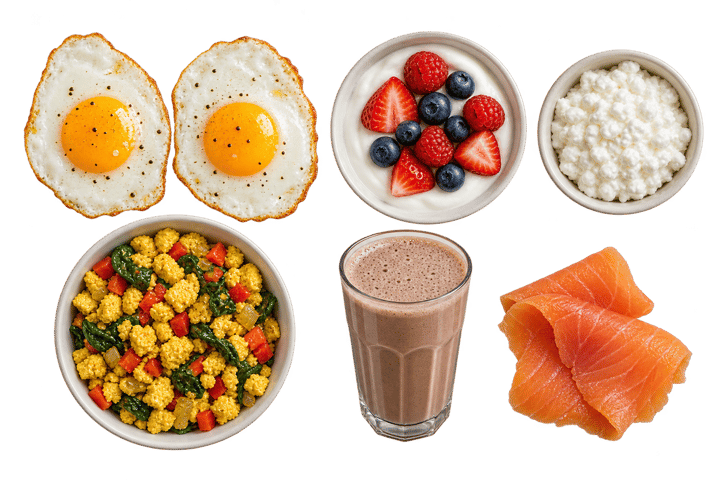
We’d eat the whole egg, and add whites when calories are tight. Whole eggs are cheap, easy and good food. They just aren’t one of the densest protein foods per calorie, so for a meal that has to clear 30 or 35 g, pair them with something like Greek yogurt or cottage cheese.
Throwing out the yolks is like buying a dozen eggs and leaving five of them at the store.
By size
| Egg size | Weight | Protein |
|---|---|---|
| Small | 38 g | 4.8 g |
| Medium | 44 g | 5.5 g |
| Large | 50 g | 6.3 g |
| Extra large | 56 g | 7.1 g |
| Jumbo | 63 g | 7.9 g |
From USDA FoodData Central record 171287, whole egg, raw.
White against yolk
| Part of a large egg | Protein | Calories | Protein per 100 calories |
|---|---|---|---|
| The white | 3.6 g | 17 | 21.0 g |
| The yolk | 2.7 g | 55 | 4.9 g |
| The whole egg | 6.3 g | 72 | 8.8 g |
Per calorie, egg whites are a top protein food, level with cod and turkey breast. The whole egg, at 8.8 g per 100 calories, sits well below chicken breast (20.2 g) and Greek yogurt (17.3 g). The myth page on egg whites goes into the trade.
How many eggs for a meal?
| Your meal line | Whole eggs it takes | Or |
|---|---|---|
| 20 g | 3 large eggs (19 g) | |
| 25 g | 4 large eggs (25 g) | 2 eggs and a 5.3 oz Greek yogurt (28 g) |
| 30 g | 5 large eggs (32 g) | 1 egg and a cup of 1% cottage cheese (34 g) |
| 35 g | 6 large eggs (38 g, 432 calories) | 2 eggs and a cup of 1% cottage cheese (41 g, 306 calories) |
Your meal line is about 0.4 g per kg of body weight. How much protein per meal explains it, and the meal line calculator lets you tap eggs onto a plate until you clear yours.
The cheapest animal protein
In October 2026, a dozen grade A large eggs cost $2.32 on average in US cities (Bureau of Labor Statistics). That’s about 77 cents for 25 g of protein, less than chicken breast at about a dollar. Only dried beans came in cheaper, at about 43 cents. See the cheapest way to get protein.
The 2025 to 2030 US Dietary Guidelines list eggs first among the animal protein foods, and name them as a source of choline for pregnancy.
Eggs show up in a lot of other foods on this site. Compare them with everything else in protein per calorie, including the round where you guess whether a whole egg or an egg white wins.
3 sources
- USDA FoodData Central, SR Legacy records 171287 (egg, whole, raw, with its egg size weights), 172183 (egg white) and 172184 (egg yolk)fdc.nal.usda.gov
- US Bureau of Labor Statistics, Average Price Data, US city average, eggs, grade A, large, per dozen (APU0000708111), October 2026bls.gov
- US Department of Agriculture and US Department of Health and Human Services, Dietary Guidelines for Americans, 2025 to 2030, January 2026cdn.realfood.gov