Is 100 g of protein a day enough?
For anyone from about 135 to 185 lb, 100 g a day is right in the typical range. If you weigh less, it’s plenty. If you weigh more, or you’re lean and lifting hard, it’s short. Put any number and your weight into Is my number enough? to see where it lands. The Gyroscope app personalizes yours.
100 g is a popular target for the same reason 10,000 steps is. It’s round, it’s easy to remember, and it sounds like a lot. But protein needs scale with your body. The 2025 to 2030 US Dietary Guidelines set 1.2 to 1.6 g per kg of body weight a day, so the same 100 g is generous for a 120 lb woman and too low for a 220 lb man.
We think 100 g is a great target for most people in the middle of the weight range, and a decent floor for almost everyone else. If you weigh over about 190 lb, aim higher. If you weigh under 135 lb, 100 g is more than the range asks for, which is fine for healthy kidneys and mostly costs you calories.
It works like a shoe size. A size 9 isn’t too big or too small, it depends whose foot it’s on.
Where 100 g lands at your weight
| You weigh | Typical range | 100 g is | Per kg |
|---|---|---|---|
| 120 lb | 65 to 85 g | above typical | 1.8 g |
| 140 lb | 75 to 100 g | typical, at the top | 1.6 g |
| 160 lb | 85 to 115 g | typical | 1.4 g |
| 180 lb | 100 to 130 g | typical, at the bottom | 1.2 g |
| 200 lb | 110 to 145 g | too low | 1.1 g |
| 250 lb | 135 to 180 g | too low | 0.9 g |
These come from the same function as the daily range calculator, with grams rounded to 5. If you have more than a fifth of your weight to lose, the range counts from nearer your goal, so a 250 lb person aiming for 180 has a range of 125 to 165 g.
When 100 g is short
Lean people who lift hard while dieting need more. A 2014 review of six studies put them at 2.3 to 3.1 g per kg of lean mass, the part of you that isn’t fat. A 180 lb man at 15% bodyfat carries about 153 lb of lean mass, which works out to about 160 to 215 g a day. For him, 100 g is about half.
For everyone else, there’s a ceiling on what extra protein does. In a 2018 review of 49 trials, the extra muscle from more protein leveled off at about 1.6 g per kg a day, with an uncertain range that went up to 2.2. At 140 lb, 100 g is already 1.6.
What 100 g looks like
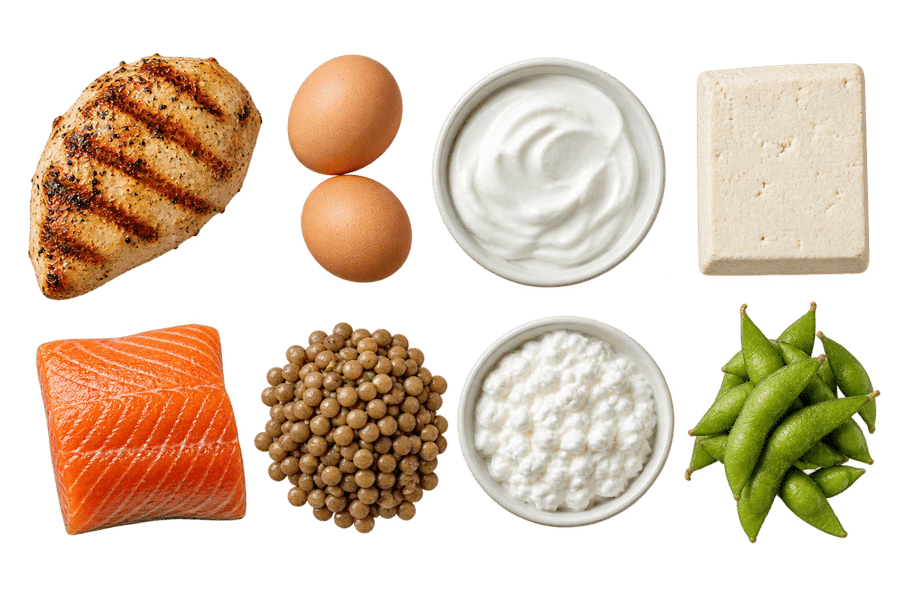
| Food | Protein |
|---|---|
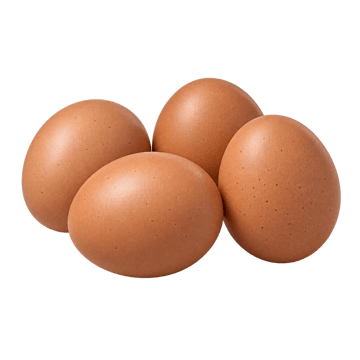
| 3 large eggs | 18.9 g |
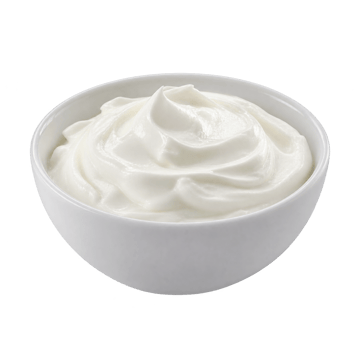
| 5.3 oz nonfat Greek yogurt | 15.3 g |
| 4 oz grilled chicken breast | 34.6 g |
| 1 cup cooked lentils | 17.9 g |
| 1/2 cup 1% cottage cheese | 14.0 g |
| Total | about 101 g, in about 790 calories |
100 g of protein is 400 calories on its own, at 4 calories a gram (USDA), or a fifth of a 2,000 calorie day.
The average American adult eats about 77 g a day. Getting from there to 100 is 23 g, which is about one swap. A 5.3 oz Greek yogurt and two eggs at breakfast come to 28 g. Most people eat about 15 g at breakfast now, so that one meal covers most of the gap.
If you don’t know what you eat now, Am I eating enough protein? adds up your normal day in two minutes. For the next number up, see is 150 g too much?
6 sources
- US Department of Agriculture and US Department of Health and Human Services, Dietary Guidelines for Americans, 2025 to 2030, January 2026cdn.realfood.gov
- USDA Agricultural Research Service, What We Eat in America, NHANES August 2021 to August 2023, Tables 1, 13, 21 and 25ars.usda.gov
- Morton et al., A systematic review, meta-analysis and meta-regression of the effect of protein supplementation on resistance training-induced gains in muscle mass and strength in healthy adults, British Journal of Sports Medicine, 2018pmc.ncbi.nlm.nih.gov
- Helms et al., A systematic review of dietary protein during caloric restriction in resistance trained lean athletes: a case for higher intakes, International Journal of Sport Nutrition and Exercise Metabolism, 2014pubmed.ncbi.nlm.nih.gov
- USDA National Agricultural Library, Food and Nutrition Information Center, calories per gram of proteinnal.usda.gov
- USDA FoodData Central, SR Legacy records 171287 (egg), 170894 (nonfat Greek yogurt), 171534 (grilled chicken breast), 172421 (lentils) and 173417 (1% cottage cheese)fdc.nal.usda.gov