A high-protein diet damages your kidneys
Short answerNo
On this page
No, not in healthy kidneys. In a review of 28 studies and a newer one of 22 trials, high-protein diets made the kidneys filter a bit more and showed no sign of injury, though most trials were short. If you have kidney disease, it’s a different question, and your doctor sets your number.
What we’d do
If your kidneys are healthy, eat your daily range without worrying about them. If you have kidney disease, don’t use this site’s range, and ask your doctor or a kidney dietitian for your number. If you have diabetes or high blood pressure and haven’t had your kidneys checked recently, get that done before you raise your protein a lot, since kidney disease is common and usually silent.
If you remember three things
- Healthy kidneys filter more on more protein. That’s a normal response, and the trials found no injury.
- The trials were short. They ran for months, and nobody has tested decades.
- Kidney disease is the exception. More than 1 in 10 US adults has it, and most don’t know.
This page follows two reviews of protein and kidney function in healthy adults (2018 and 2026), the 2024 KDIGO kidney guideline and the CDC’s 2026 kidney disease figures, checked on November 14, 2026.
Why people believe it
The belief starts with a true fact. When you eat more protein, your kidneys filter more blood. Doctors call it a higher filtration rate, and for people whose kidneys are already damaged, extra work can speed up the damage. That’s why people with kidney disease are often told to limit protein.
From there it’s a short step to “protein is hard on the kidneys” for everyone. Add the image of bodybuilders eating huge amounts, and the warning sounds like common sense.
What a higher filtration rate means
Your heart beats faster when you climb stairs. That’s your heart doing its job under a bigger load, and in a healthy heart it’s harmless. Kidneys filtering more after a big protein meal works much the same way. It becomes a problem when the organ is already failing and can’t keep up.
The useful question is whether the extra filtering leads to damage over time in healthy people. That’s what the trials tested.
What the trials found
28 studies
1,358 healthy adults. Devries and colleagues, Journal of Nutrition, 2018
High protein meant at least 1.5 g per kg, 20% of calories or 100 g a day. Filtration ended a little higher on high protein, but the change over the trials didn’t differ from normal protein. The authors concluded that high protein intakes “do not adversely influence kidney function” in healthy adults.
The authors flagged an unclear risk of bias in how people were chosen.
22 trials
Adults without kidney disease. Teixeira Silva and colleagues, 2026
High-protein diets raised estimated filtration. Creatinine, the blood marker that rises when kidneys fail, didn’t change across 19 trials and 1,044 people. No consistent sign of kidney injury.
Most trials were short, and the authors say the long-term effect is still uncertain.
We’re confident that the amounts on this site, up to 1.6 g per kg, are safe for healthy kidneys. Higher amounts also showed no harm in these trials. What nobody has measured is decades of very high intakes, which is one reason we don’t recommend going far past what your muscle can use.
Where the worry is right
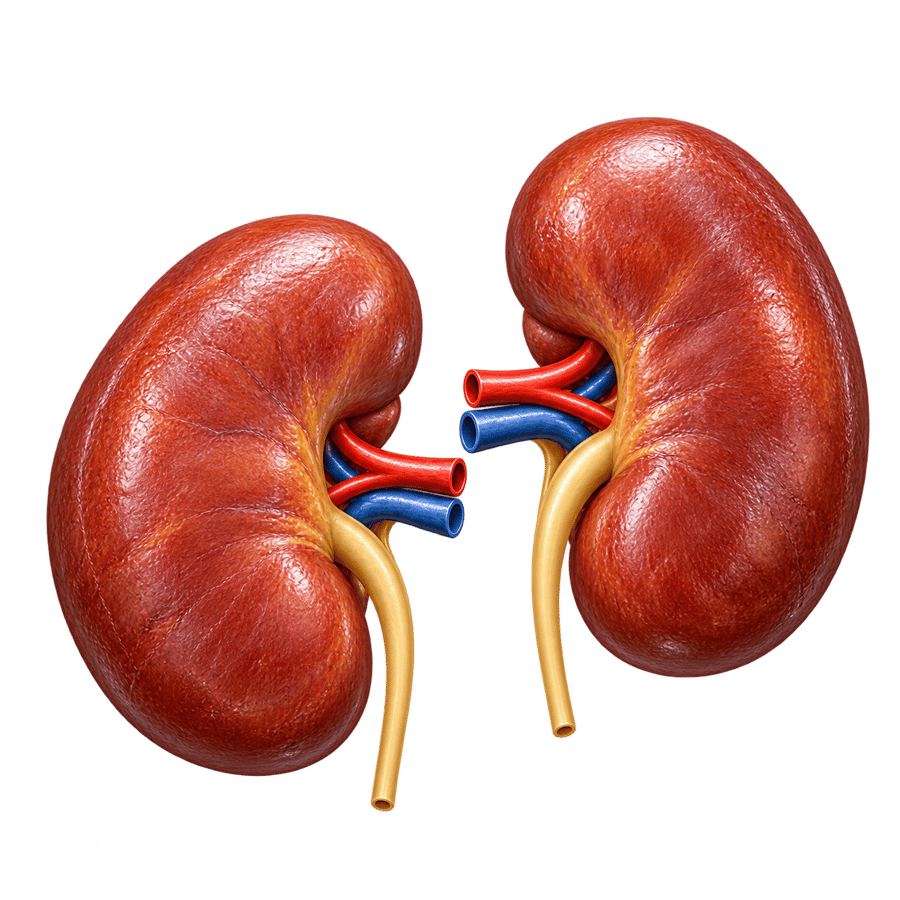
Kidney disease changes the answer. The 2024 international kidney guideline (KDIGO) suggests a lower protein intake for adults with moderate to advanced kidney disease, and advises against high intakes for anyone at risk of it getting worse. Even the PROT-AGE expert group, which asks older adults to eat more protein, makes an exception for severe kidney disease when someone isn’t on dialysis.
And kidney disease is common. The CDC estimates more than 1 in 10 US adults (14%, about 37 million people) have it, and about 9 in 10 of them don’t know. It’s more common with diabetes (about 4 in 10) or high blood pressure (about 1 in 5). The reason to be careful is that many people don’t know whether their kidneys are healthy.
The case for caution
Some experts would still set a ceiling. The 2025 advisory on nutrition with GLP-1 drugs says protein held above 2 g per kg a day for a long time should be avoided because of possible adverse effects. The National Academies set no upper limit at all.
Up to the top of the typical range, the evidence is good. Somewhat above it, the trials found no harm. Far above it for years, nobody has tested it, and there’s no muscle benefit to chase. We’d stay near your range unless you’re lean and lifting hard on a diet.
7 sources
- Devries et al., Changes in kidney function do not differ between healthy adults consuming higher- compared with lower- or normal-protein diets: a systematic review and meta-analysis, Journal of Nutrition, 2018pubmed.ncbi.nlm.nih.gov
- Teixeira Silva et al., Effects of high-protein diets on renal function and body composition in adults without chronic kidney disease: a systematic review and meta-analysis of randomised trials, Diabetes, Obesity and Metabolism, 2026pubmed.ncbi.nlm.nih.gov
- Kidney Disease: Improving Global Outcomes (KDIGO) CKD Work Group, KDIGO 2024 clinical practice guideline for the evaluation and management of chronic kidney disease, Kidney International, 2024kdigo.org
- CDC, Chronic kidney disease in the United States, 2026cdc.gov
- National Academies, Dietary Reference Intakes: Recommended Dietary Allowances and Adequate Intakes, total water and macronutrientsnationalacademies.org
- Bauer et al., Evidence-based recommendations for optimal dietary protein intake in older people: a position paper from the PROT-AGE Study Group, Journal of the American Medical Directors Association, 2013pubmed.ncbi.nlm.nih.gov
- Mozaffarian et al., Nutritional priorities to support GLP-1 therapy for obesity: a joint advisory, Obesity Pillars, 2025pmc.ncbi.nlm.nih.gov